Israel The Truth — Fighting the Lies of the Palestinian Fake Agenda
by Gary Caplan
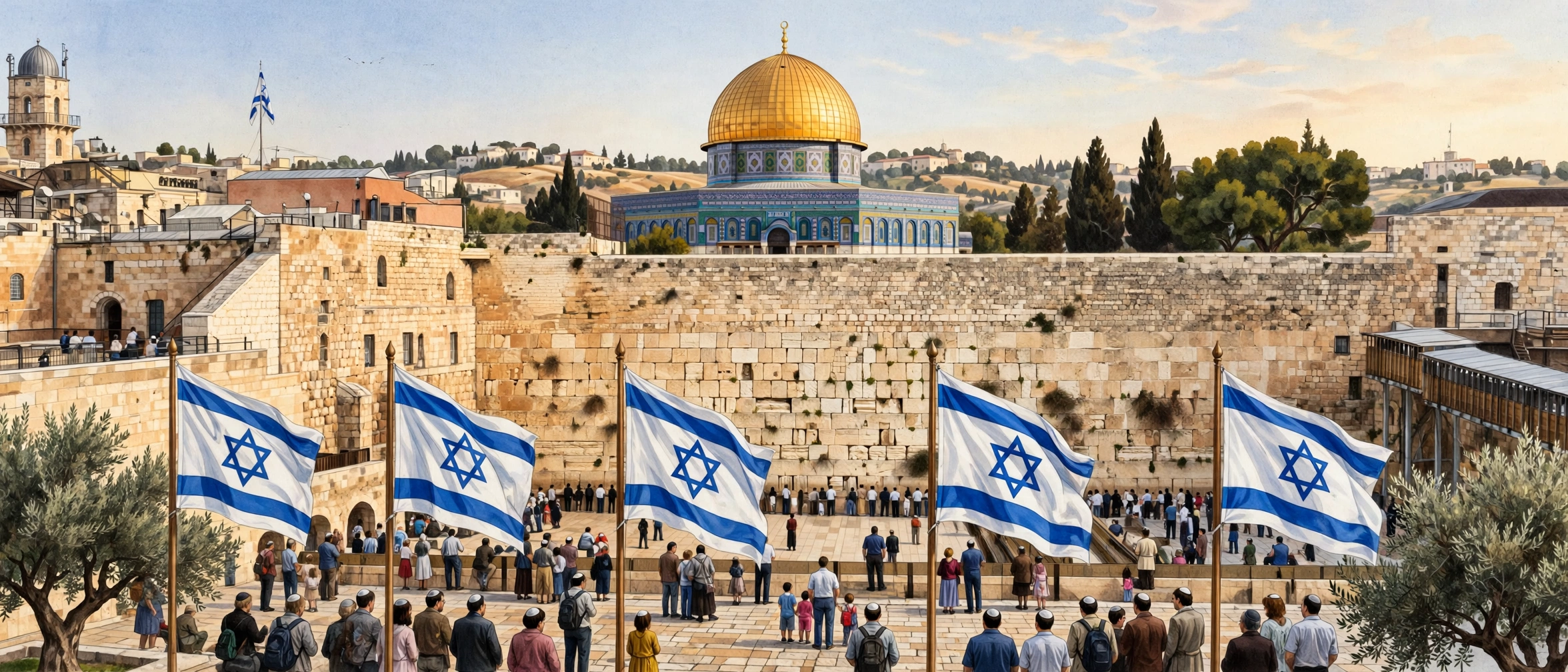
Jerusalem — illustration. Israeli flags flying in front of the Western Wall, with the golden Dome of the Rock behind it. Artwork on this page is illustration, not photography.
Israel's history in plain facts — and the common lies told about it, answered one by one, with the source next to each answer so you can check it yourself.
Run by Gary Caplan, administratorFor anyone who wants the record, not the sloganFacts verified against the sources listed on this page
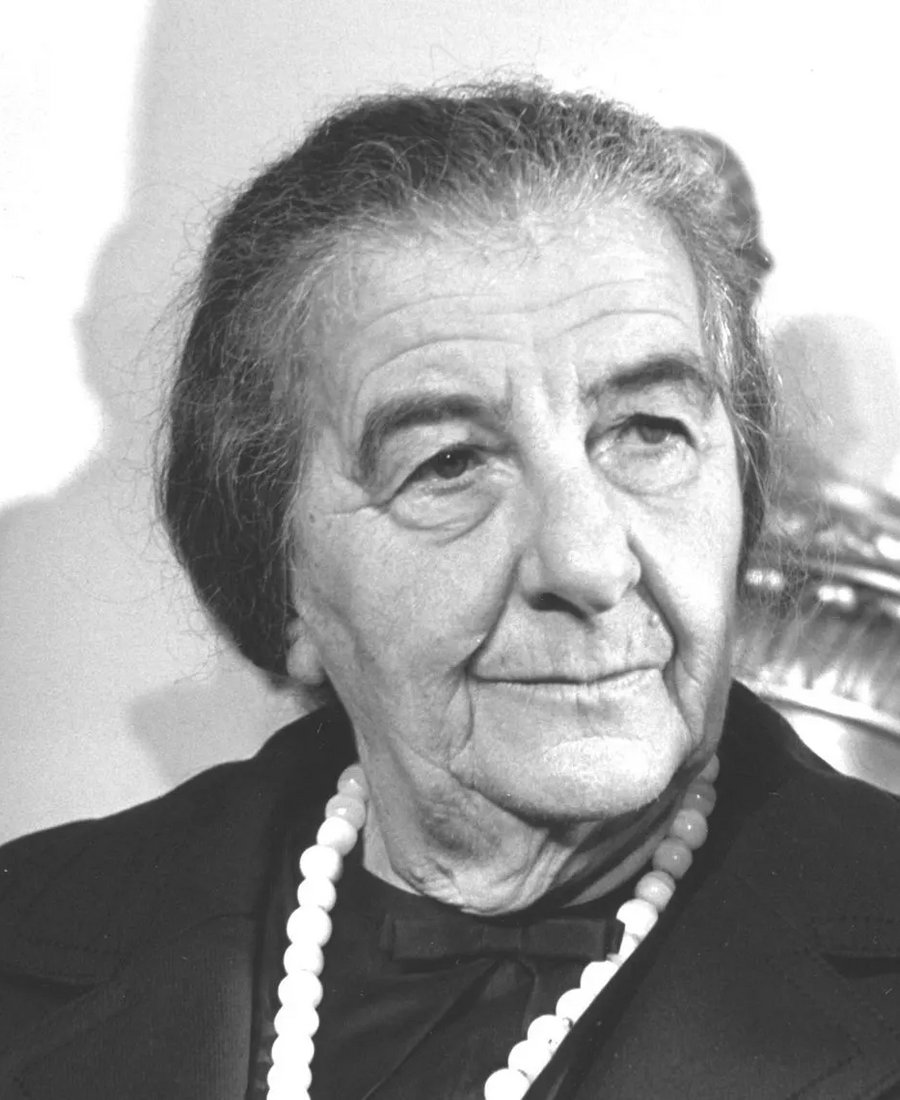
Golda Meir (1898–1978) — a founder of the State of Israel and its Prime Minister from 1969 to 1974. Photograph.
Golda Meir said it best
We will only have peace with the Arabs when they love their children more than they hate us.
Golda Meir — Prime Minister of Israel, 1969–1974
Her full words, as quoted in A Land of Our Own: An Oral Autobiography (1973): “We can forgive the Arabs for killing our children. We cannot forgive them for forcing us to kill their children. Peace will come when the Arabs will love their children more than they hate us.”
The true story, in one go
One article, from the beginning to today — the good of Israel, and the hypocrisy and the lies of those who attack it. It opens with the whole story in brief and an index of its ten parts, so you can read it straight through or jump to the part you want. Then check the timeline, the myths and the sources below it.
Before you believe the next picture, the next celebrity post, or the next funded lie on Facebook, ask one simple question: where is the evidence? Hamas and its supporters are selling the world a country that never existed as a state — a story invented to erase the oldest truth in this land. The Jews have lived in the Land of Israel for 3,000 years. Their connection reaches back nearly 4,000 years in biblical and historical tradition, and archaeology confirms it for more than 3,200 years. That is not a slogan. That is the record — in history, in archaeology, in legal documents, in textbooks and encyclopaedias, and in peer-reviewed research. Everything in this article flows from it.
The whole story in brief
The Jews have lived in this land for 3,000 years. There was never a sovereign Palestinian state — no king, no coin, no capital, no state in the record.
In 1947 the UN offered a Jewish state and an Arab state side by side. The Jews accepted. The Arab side rejected it and went to war.
Jews were murdered, women were raped, children were killed — and some 850,000 Jews in total did not just leave Arab and Muslim countries, they were driven out, losing their homes, land and businesses. The Arabs who stayed in Israel in 1948 became citizens — today there are about two million Arab citizens of Israel.
Israel handed Gaza back completely in 2005. Hamas chose rockets and tunnels. Gaza’s population grew from 356,000 in 1967 to 2,226,544 by mid-2023 — and no court has ever ruled that Israel committed genocide.
The outrage is selective: endless noise for Gaza, and silence for Sudan, Yemen and Syria, where the suffering is larger and no Jew can be blamed for it.
Jump to a part of the story
That is not a slogan. That is the record.
Three thousand years in the land
The kingdoms of Israel and Judah existed there. Jerusalem was the centre of Jewish national and religious life centuries before Christianity and more than a thousand years before the Arab-Muslim conquest. And not simply because the Bible says so: the archaeology is overwhelming — Hebrew inscriptions, coins, seals, synagogues, ritual baths, burial sites, Jewish settlements. Even Israel's enemies recorded it. Assyrian and Babylonian records name Israel, Judah and their kings; Greek and Roman writers described Judea and the Jews. Every empire that ruled the Middle East — Egyptian, Assyrian, Babylonian, Persian, Greek, Roman, Ottoman — left records of the Jews, of Israel, of Judea and Jerusalem. Rome didn't invent the Jews; Rome conquered them. Babylon didn't invent Judah; Babylon conquered it. And despite conquest, exile and dispersion, Jews were never completely removed: communities survived under Roman, Byzantine, Muslim, Crusader, Mamluk, Ottoman and British rule, in Jerusalem, Hebron, Safed, Tiberias and the Galilee. Later generations returned from Europe, Russia, North Africa and elsewhere — but returning from a diaspora does not make an ancient people foreign to its ancestral homeland. They were returning to the birthplace of their own civilisation, where Jews were already living.
Modern science backs the same record. Genome-wide studies — Behar and colleagues in Nature in 2010, Atzmon and colleagues in the American Journal of Human Genetics the same year — show Jewish populations, Ashkenazi, Sephardi and Mizrahi alike, sharing a common Middle Eastern ancestral core, even after centuries in Europe, North Africa and America. The same research shows the Arabs of the land clustering broadly with their Jordanian, Syrian and Lebanese neighbours, as part of the wider Levantine-Arab population — because there was no difference between them. They were never a distinct people set apart from them. There is no separate genetic signature marking out an ancient, distinct Palestinian nation — because the history that would have produced one is not there either.
Prove it — the challenge that has never been answered
So here is the challenge. It has never been answered. You claim 3,000 years of Palestinian national history? Prove it. Show me the kings, kingdoms, dynasties, governments, armies, wars, treaties, coins, inscriptions, seals and ancient manuscripts. Show me the Egyptian, Assyrian, Babylonian, Persian, Greek, Roman or Ottoman historians recording a distinct Palestinian nation. Show me that nation in the Old Testament, the New Testament, or the Quran. A Palestinian people and nation are mentioned in none of them. The Quran repeatedly mentions the Children of Israel; it never calls a people “Palestinians.” There is no Palestinian archaeology of a nation — no kings, no coins, no sovereign kingdom, no government, no capital, no state in the record. A people with 3,000 years of national history leaves a record. The Jews did.
A people with 3,000 years of national history leaves a record. The Jews did.
Not a distinct people, not a separate nation
Arabs lived in the land — nobody honest denies that. But hear this clearly, because this is where the lie starts: those Arabs were NOT a distinct people. Not a separate nation, and nothing like the Jews. No difference from the Arabs of what became Jordan, Lebanon and Syria — same language, same religion, same tribes, same wider Arab world. No kingdom of their own in this land, no capital, no national history of their own there. Many were nomads, moving with their herds across a region with no modern borders, ruled for centuries by successive empires, most recently the Ottomans, then Britain. Compare the Jews: one people, one language, one faith, one capital — Jerusalem — kings, coins, inscriptions, a recorded national history in this exact land going back 3,000 years, and a presence that never ended. The Jews are the indigenous people of this land. The Arabs who lived in it were part of the surrounding Arab world. That is very, very different — do not let anybody blur it. Palestinian nationalism is modern. It developed in the late Ottoman and British Mandate periods, became an organised political movement in the 20th century, and the PLO was founded in 1964 — three years before Israel held the West Bank or Gaza at all. And explain this: from 1948 to 1967 Jordan controlled the West Bank and East Jerusalem while Egypt controlled Gaza, and in nineteen years no independent Palestinian state was established or proclaimed in either. You don't get to project a modern movement backwards 3,000 years and call it ancient history. Show me the kings. Show me the state. Show me the coins.
1948 — the Nakba, and the Jewish Nakba
Which brings us to 1948, and the word you are not allowed to discuss honestly: the Nakba. I don't deny that hundreds of thousands of Arabs became refugees in the 1948 war — a war the Arab side chose when it rejected partition and invaded to wipe the new Jewish state out at birth. They fled the fighting, and the fear war brings. What I reject is the claim that Jews arrived from Europe, stole an existing Palestinian country and ethnically cleansed it. Jews did not suddenly arrive in 1948: they had been coming home for centuries — in 1700, in 1740, in 1777, from 1808, in the First Aliyah of 1882 — and Jews had never left in the first place. The UN proposed partition: a Jewish state and an Arab state. The Jewish leadership accepted it; the Arab leadership rejected it. War followed, and after Israel declared independence, neighbouring Arab armies invaded. Israel's Declaration of Independence did not tell its Arab inhabitants to leave — it appealed to them to maintain peace and help build the new state “on the basis of full and equal citizenship.” Reducing a war's refugee crisis — fighting, fear and flight together — to “the Jews threw everyone out” isn't history. And the Arabs who remained stayed: their descendants are the roughly two million Arab citizens of Israel today, who vote, elect members of the Knesset, and serve as doctors, lawyers, professors, judges and public officials. Nor was Israel some unique colonial invention: its independence in 1948 was one of many new nations established since 1918, from Ireland and Poland to India, Pakistan and Jordan. Nobody calls those countries fabrications that must be wiped off the map. Only Israel gets that treatment — that double standard is hypocrisy, not history.
Now the catastrophe that gets left out: the Jewish Nakba. And do not let anyone dress it up — it was not pretty, and the Jews did not just leave. They were driven out at the point of murder. Jews were murdered in the streets. Women and girls were raped. Children were killed in front of their parents. Homes were looted and burned, businesses were smashed, seized and stolen, synagogues were attacked and torched, and land and savings built up over centuries were taken from them. Whole families were forced to run for their lives with nothing but what they could carry. From Morocco, Algeria, Tunisia, Libya, Egypt, Iraq, Syria, Lebanon and Yemen, some 850,000 or more Jews in total were driven out — expelled or forced to flee, stripped of citizenship and property, their homes, land and businesses taken — and among them, many were murdered, raped, beaten and robbed. It was a disaster for the Jews, and it was done to them deliberately. Iraq's Jewish community was some 2,600 years old; in June 1941 came the Farhud in Baghdad — a mob murdered more than 180 Jews, wounded about 1,000, raped women and girls, looted hundreds of Jewish businesses and destroyed some 900 Jewish homes — and within a decade almost the entire community was gone. In Tripoli, Libya, in 1945, more than 130 Jews were murdered and synagogues were burned. In Aden, in 1947, rioters murdered 82 Jews and burned the synagogue and the schools. In Aleppo, Syria, in 1947, synagogues, homes and shops were burned and thousands of Jews fled in terror. Kill, rape, loot, burn, seize, expel — that was the pattern, country after country. Where are the Jews of Iraq today? Of Egypt, Libya, Yemen, Syria? Gone. Communities that survived Babylon and Rome did not survive this. Israel absorbed enormous numbers of these refugees, alongside Holocaust survivors, and made them citizens — no permanent refugee camps, no hereditary refugee status passed down the generations. Discuss the Arab refugees of 1948, by all means — but notice who never mentions the Jewish Nakba: the people who lecture Israel about refugees while the Arab and Muslim world murdered, raped, robbed and emptied itself of its Jews and said nothing. That silence is part of the lie.
That silence is part of the lie.
1967, and the chance Gaza was handed
In 1967, surrounded by armies calling for its destruction, Israel won the Six-Day War and took the West Bank from Jordan and Gaza from Egypt. Look at Gaza's population under Israel from that day: about 356,000 in 1967; about 1.02 million in the 1997 census; 1,416,543 in 2007; 1,899,291 in 2017; 2,226,544 by mid-2023 — more than six times the 1967 figure, and still growing fast. Hold on to those numbers, because we will come to the word “genocide” — and a population that multiplies sixfold under its supposed exterminator is a strange kind of extermination. What has happened in Gaza in war is a human tragedy — but a tragedy inflicted on its people above all by Hamas, as the next part of this story shows.
In 2005, Israel completely withdrew from Gaza. Every soldier out; approximately 8,000–9,000 residents forcibly evacuated from all 21 settlements, their homes destroyed, their communities dismantled. For the first time in decades, Gaza had no Israeli settlements and no permanent Israeli military presence — a genuine chance to develop its economy and govern itself. Food, fuel, construction materials and aid kept entering, and control of Gaza's side of the Rafah crossing passed to the Palestinian Authority under an internationally supervised arrangement. Instead of building peaceful institutions, Palestinians elected Hamas in 2006 — and in 2007 Hamas violently expelled the Palestinian Authority and its Fatah rivals and seized complete control. Hamas then poured its resources into rockets, weapons and an extensive network of attack tunnels, while continuing its stated campaign to destroy Israel. Only after that takeover and the continuing attacks did Israel and Egypt tighten their borders and impose the blockade meant to restrict weapons — restrictions that followed Hamas's takeover; they did not precede the withdrawal. Bill Clinton summed up the pattern in 2016: “I killed myself to give the Palestinians a state.” His proposal would have given them all of Gaza and approximately 96–97% of the West Bank. They rejected it — the same pattern, again and again. Gaza could have used 2005 as the start of peaceful development and eventual statehood. Instead Hamas chose authoritarian rule, military expansion and war — and Gaza's people have paid an enormous price.
And nobody exposes the hypocrisy better than Egypt, Gaza's so-called Arab brother next door. When Hamas murdered some 1,200 people in Israel on 7 October 2023 and Israel went to war to defend itself, the world screamed at Israel — and said almost nothing about Egypt, which kept its Rafah border shut behind a heavily fortified frontier, refusing to let Gaza's civilians — not the women, not the children, not the injured — cross into safety, even temporarily, while lecturing Israel on humanity. If Egypt cared about Palestinian lives, it could have opened its gates, even for a week. It would not. The world loves to scream at Israel because it's easy. History won't forget Egypt's silence — or its wall.
“Genocide” — a word with a legal meaning
Now the ugliest word of all, thrown around like a fashion statement — because “genocide” has become fashionable, and everybody feels cool throwing it around. If you use that word because it gets likes, stop and think. It is one of the most serious accusations that can be made, and hearing it a hundred times on social media doesn't make it true. Genocide has a specific legal meaning: acts such as killing or causing serious harm, carried out with the intent to destroy a national, ethnic, racial or religious group, in whole or in part. There is no minimum death toll — a death toll tells you the scale of the suffering — but the evidence has to establish the intent to destroy the group. History gives clear examples of the real thing. The Armenian genocide: Ottoman authorities targeted Armenians through mass killings and forced deportations into starvation and death. The Holocaust: Nazi Germany and its collaborators systematically murdered six million Jews. Cambodia under Pol Pot: a tribunal found the Khmer Rouge's killing of the Cham Muslim and ethnic Vietnamese communities constituted genocide. Srebrenica in 1995: Bosnian Serb forces murdered more than 8,000 Bosniak men and boys, and international courts ruled it genocide. Genocide is Bosnia. Genocide is Cambodia. Genocide is Nazi Germany. Genocide is Armenia. Those are what genocide actually looks like. It does not mean fighting a terrorist organisation that invaded your country, massacred your civilians and took your people hostage.
In Gaza the civilian suffering is devastating — nobody honest denies that. But the legal question is intent, and there the accusation collapses. Israel warns civilians before operations: evacuation notices, leaflets dropped in their millions, mass text messages, phone calls, announced routes to safety. Armies intending to destroy a population do not warn it to leave and urge it to go. Hamas, by contrast, tortures and beats its own subjects, has urged civilians to stay after Israel ordered evacuations, forces them to act as human shields, and deliberately embeds itself among civilians — firing from homes, schools, hospitals, mosques and other civilian infrastructure, precisely to produce civilian casualties for propaganda. Using civilians as human shields and firing from hospitals, schools and mosques is a war crime — verified by the UN and others, not an Israeli invention. Warning civilians to leave is an effort to preserve life: the exact opposite of an intention to destroy a population. Civilian deaths in war are tragic, but they are not automatic proof of genocide. Genocide by Israel has never been proved: no court has ever ruled that Israel committed genocide, and the International Court of Justice has not decided the case on the merits — its rulings so far have been provisional measures only, not a finding of genocide. The ICC prosecutor's case against Israeli leaders has centred on alleged war crimes and crimes against humanity — not a charge of genocide. The genocide claim comes from advocacy groups and from a commission set up by the UN Human Rights Council — not from a court finding, and a commission is not a court.
Armies intending to destroy a population do not warn it to leave and urge it to go.
Understand what this war actually is. It is an urban war — street by street, house by house, tunnel by tunnel — against an adversary, Hamas, that rules Gaza by force: a regime that not only tortures and beats its own subjects but forces them to be human shields and fires from civilian infrastructure, including hospitals, schools and mosques. That is a war crime, and it has been verified by the UN and others. An urban war against an enemy like that, however devastating for the civilians caught in it, is not genocide — and screaming the word does not make it one.
And look at the numbers one more time, because numbers do not do slogans. Gaza's population was 356,000 in 1967; by mid-2023 it was 2,226,544 — more than six times bigger. Israel leads the world in medicine, in technology and in innovation — but genocide is the one thing it is not very good at, because a population marked for extermination does not grow from 356,000 to more than 2.2 million.
Don't take my word for that — listen to military experts, not social-media activists. John Spencer, Chair of Urban Warfare Studies at West Point's Modern War Institute, says Israel has taken extraordinary measures to reduce civilian deaths in Gaza. Michael Schmitt, a leading scholar of the law of armed conflict, has documented Israel's warnings and civilian-protection procedures. Colonel Richard Kemp, former commander of British forces in Afghanistan, says the IDF goes further than most armies to protect civilians against an enemy embedded in civilian neighbourhoods. The High Level Military Group, senior retired commanders from democratic militaries, says the same. Hamas hides in tunnels, hospitals, schools, mosques, apartments and refugee areas precisely to create civilian casualties. Israel warns, evacuates, delays attacks, opens routes, reviews targets, and still fights house-to-house against terrorists. That is not genocide. That is a democracy fighting a terror army that uses its own people as human shields.
The same consistency test applies to the UN and famine. Anyone who invokes the UN on Gaza should accept its findings consistently — including the ones that complicate the slogan. After the ceasefire and the increase in humanitarian and commercial supplies in late 2025, the UN-backed IPC reported that no part of Gaza was still classified as in famine, while warning that food insecurity remained severe. That is the official record: improvement, not uninterrupted deterioration. So if someone claims famine in Gaza today, ask for the current assessment, its date, and the area it covers. And if they use nutrition figures to claim deliberate starvation, ask for the evidence of intent — a statistic alone does not establish it. You cannot treat a UN warning as unquestionable, then ignore a UN finding of improvement. Exaggeration serves nobody.
Israel and Iran — a shield and a sword
The difference between Israel and Iran is not ethnicity, religion or geography. It is conduct. Israel is widely believed to have possessed nuclear weapons for decades, yet it has never used them, never threatened a nuclear strike against another nation, never armed a terrorist organisation with nuclear capabilities, and never made the destruction of another country the centrepiece of its foreign policy. Its posture is deterrence, pure and simple: leave us alone, or you will not destroy us. Iran's regime has built the opposite record. For decades Tehran has funded, armed, trained and directed a network of terrorist organisations — Hezbollah, Hamas, Palestinian Islamic Jihad, the Houthis and other proxies across the Middle East — through its Revolutionary Guard and Quds Force: the money, the weapons, the training, the operational support. These groups have repeatedly attacked Israel, and some openly declare its destruction as part of their mission. Iran has spent forty years cultivating them as instruments of regional power. The question is whether the world should trust the most destructive weapons ever created to a regime that has spent decades exporting violence through proxies dedicated to destroying its neighbour. Israel's capability is a shield against annihilation; an Iranian nuclear weapon would be a sword in the hands of that record.
The Israel the world uses every day
And while the world obsesses over Israel, it uses Israeli ingenuity every day. Waze GPS technology was created in Israel. So were the USB flash drive and the PillCam, the camera in a capsule that lets doctors see inside the body without surgery. Copaxone, a leading multiple sclerosis treatment, came out of Israeli research, and Teva, one of the world's largest makers of generic medicines, is Israeli. Mobileye's driver-assistance technology, developed in Jerusalem, watches the road in cars worldwide. Israeli drip irrigation turned desert farming into an export copied on every continent. And Iron Dome, which intercepts rockets aimed at Israeli towns, is a defensive weapon, built to save lives on both sides. Every day these innovations save lives and make modern life easier — including for people who march against the country that produced them.
The hypocrisy — and the silence
Which brings us to the hypocrisy that hangs over this whole story. Since 1948 the Islamic world has been consumed by an obsession with Israel — while spending those same decades bombing, starving and massacring its own. Millions have died in Muslim-against-Muslim wars, ignored by the same voices that scream “genocide” whenever Israel defends itself. In 1971, Pakistan's army massacred Bengalis in what became Bangladesh, killing vast numbers of fellow Muslims. Lebanon's civil war, 1975 to 1990, set its militias — Sunni, Shia, Christian, Druze and Palestinian — slaughtering each other for fifteen years. Somalia collapsed in 1991 into a clan war that has killed more than half a million people and never really ended. After 2003, Iraq's Sunni and Shia militias butchered each other in suicide bombings and executions. Libya tore itself apart after 2011. In Yemen, war since 2014 has killed or starved more than 300,000 people in one of the world's worst humanitarian disasters — inflicted by Muslims on Muslims. Syria's civil war killed hundreds of thousands and displaced millions — entire cities destroyed, children buried under rubble. And in Sudan, Arab militias waged genocide in Darfur from 2003 — rape, torture, slavery and starvation — and the war that reignited in 2023 between the Sudanese Armed Forces and the Rapid Support Forces has produced what international organisations describe as the world's largest humanitarian crisis today: more than 30 million people in need of assistance, hundreds of thousands of children starving, millions displaced — the world's largest displacement crisis — receiving a fraction of the attention given to Gaza. Coverage is not a measure of suffering. From the moment Israel was born, Arab regimes weaponised the Palestinian cause as a permanent distraction, poisoning generations with hatred of Jews while waging war on each other. They chant about brotherhood and have slaughtered millions of their own. When Muslims kill Muslims, the world stays silent. When Israel defends itself, the world erupts. That is the real hypocrisy.
When Muslims kill Muslims, the world stays silent. When Israel defends itself, the world erupts. That is the real hypocrisy.
Where were you?
So: you post about Gaza. You wave Palestinian flags. You support flotillas. You tell the world how outraged you are — every day, every week, every month. But where were you for Yemen? For Sudan? For Syria — hundreds of thousands dead, millions displaced, entire cities destroyed? Where were you for Afghanistan, Libya, Iraq, Somalia? For Iran, when thousands upon thousands of innocent young people were slaughtered in the streets by their own regime? Where were you when innocent people were being murdered, starved, tortured and driven from their homes — children starving, families destroyed, communities wiped out? Endless outrage for one conflict, one country, one cause — and silence for all the rest. No flags. No marches. No daily posts. Just silence. The question is not why you speak about Gaza. The question is why you were silent about so much else. I will tell you where you were: busy hating Jews. Murder, slaughter and death do not bother you when Muslims are slaughtering Muslims. You only care when Jews are involved — even though Israel is defending itself against terrorism from Hamas, which embeds itself among civilians. That is not concern for human life. That is selective outrage, and it has a name.
The question is not why you speak about Gaza. The question is why you were silent about so much else.
It is fed by trend activism. Suburban youths jump from cause to cause — BLM, climate change, feminism, gun control, now Palestinian flags — treating activism like a fashion statement, rarely studying or understanding the issues they shout about. They consider themselves informed, educated by two-minute TikTok clips and equally ignorant friends. Fiction spreads like a virus; the dumb educate the dumber. Complex histories become slogans; serious issues become viral clips. Activism without education: emotional, trend-driven, performative. And in a few years the same activists will be just as loud about some new cause — equally misunderstood, equally superficial, equally transient.
Repetition is not evidence. A lie repeated a hundred times on social media is still a lie, and a word like “genocide” screamed until it sounds like truth is still an accusation that has to be proved — with intent, with evidence, with law. The facts are these, and every one is checkable in the timeline, the myths and the sources that follow. The Jews did not appear in 1948: their recorded history in this land runs for 3,000 years, their presence never ended, and Jews were already coming home in organised waves in the 1700s and 1800s. The Arabs who lived in the land were not a distinct people — no difference from the Arabs of Jordan, Lebanon and Syria — and never a separate nation like the indigenous Jews. There never was a sovereign Palestinian state for Israel to steal; Palestinian nationalism is a modern movement, and its organisation was founded in 1964. In 1948 the Jews accepted partition and the Arab side chose war; the Arabs who stayed became citizens, and the Jews driven out of the Arab world became citizens too — and nobody marches for them. Gaza was handed its chance in 2005, and Hamas chose rockets and tunnels over a state. An army that warns civilians to live is the opposite of an army committing genocide, and the experts who study urban war say so. Israel's weapons are a shield; Iran's proxies are a sword pointed at Israel's existence. And the outrage that fills the streets for Gaza and falls silent for Sudan, Yemen and Syria is not about human life at all. Don't let repetition do your thinking for you. That is the truth — the whole of it, in one story.
Sources for the Gaza 2005 account above: Reuters and the Associated Press on Israel's withdrawal, Hamas's 2006 election and 2007 takeover and the subsequent blockade; Reuters on the Rafah crossing; the United Nations and the Council on Foreign Relations timelines; Bill Clinton's recorded 2016 remarks on the rejected Palestinian-state proposal. Gaza population figures are the standard UN and Palestinian Central Bureau of Statistics series for the Gaza Strip. Genetic studies cited: Behar et al., Nature 2010; Atzmon et al., American Journal of Human Genetics 2010.
Choose a topic
Every main subject from the article above, one at a time. Tap a button and that topic opens in full right underneath the button you tapped — read it, then pick another.
Palestinian history
Palestinian history — the test. Here are serious questions. Most span 3,000 years of claimed history, from the age of the Bible to 1948. Some test the modern myths directly: whether Palestine was a country before 1948, the UN offer in 1947, the years 1948–1967 when Jordan held the West Bank and Egypt held Gaza, Gaza before 2005, descent from the ancient Philistines, and whether every Arab was expelled in 1948. Every one of the ancient questions can be answered easily for the Jews of this land — and for Egypt, for Rome, for every real nation of the ancient world.
How it works: the questions are mixed, the way a real test is mixed. Some are fill in the blank — type your answer. Some are True or False — tap one. Some are Yes or No — tap one. Some ask you to write your answer out in full. For the fill-in and write-your-answer questions there is no answer to give, so whatever you type comes back Incorrect — there is no such Palestinian record, no such Palestinian capital, no such Palestinian coin, no such Palestinian dig, no such Palestinian scroll, no such Palestinian battle. For True or False and Yes or No, there is a correct answer for each question — tap what the record shows and you get a green Correct; tap the myth and you get red Incorrect. On most questions that is False or No, because the thing claimed did not exist. One question is the exception that proves the test is honest: the 1947 question is True — green for True, red for False — because an Arab state really was offered, and refused.
Fill in the blank — type your answer
1Where in the Old Testament are Palestine or a Palestinian people mentioned? Fill in the book and chapter.
Incorrect — there was no such mention: the Old Testament names no Palestinian people or nation.
Why there is no answer
The Old Testament names Israel, Judah and the Children of Israel again and again — their kings, their wars, their capital, their God. It never names a Palestinian people or a Palestinian nation. The only similar-sounding people are the Philistines — a different people altogether, sea peoples from the Aegean world who settled the southern coast, fought Israel, and disappeared as a distinct people after Babylon destroyed their cities around 600 BCE, more than two thousand years before the modern movement. A similar sound is not the same people.
True or False — tap one
2True or False: the New Testament names a Palestinian nation living in the land in the time of Jesus.
Your call:
Incorrect — the New Testament names no Palestinian nation.
Correct — the New Testament names no Palestinian nation.
Why there is no answer
The New Testament names Judea, Galilee, Samaria, Jerusalem and the Jews. It never names a Palestinian people, a Palestinian nation or a Palestinian state — because in the 1st century there was none there to name.
Yes or No — tap one
3Does the Quran name a Palestinian people or nation — Yes or No?
Your call:
Incorrect — the Quran names no Palestinian people or nation.
Correct — the Quran names no Palestinian people or nation.
Why there is no answer
The Quran never calls any people “Palestinians” and never names a Palestinian nation. What it does name, repeatedly, is the Children of Israel — Bani Isra’il — and it speaks of the Holy Land in connection with them. Search the whole text. The people claimed to have been there for 3,000 years are not in it.
Write your answer
4What was the capital of Palestine in biblical times? Write your answer in full.
Incorrect — there was no such Palestinian capital.
Why there is no answer
There was no such capital — because there was no such state. A capital belongs to a kingdom or a government, and there was no Palestinian kingdom or government in biblical times for a capital to belong to. The capital in the land in biblical times was Jerusalem — capital of Israel and then of Judah, the Jewish kingdoms.
Fill in the blank — type your answer
5Name one Palestinian king — just one, in 3,000 years. Fill in his name and century.
Incorrect — there was no such Palestinian king. David was a Jewish king, King of Israel, not a Palestinian king.
Why there is no answer
No such Palestinian king is recorded — not in the Bible, not in Egyptian, Assyrian or Babylonian records, not in Greek or Roman history, not in any museum on earth. David was a real king — a Jewish king, King of Israel, not a Palestinian king. Israel and Judah have Jewish kings by the dozen, recorded even by the empires that fought them. Those were Jewish kings, not Palestinian kings. For a Palestinian king, across three thousand years, the record is empty.
True or False — tap one
6True or False: a Palestinian kingdom once ruled part of this land and appears in ancient king lists.
Your call:
Incorrect — there was no such Palestinian kingdom.
Correct — there was no Palestinian kingdom.
Why there is no answer
No Palestinian kingdom appears in any ancient king list, chronicle or inscription. The kingdoms recorded in this land are Israel, Judah and their neighbours — Moab, Edom, Ammon, the Philistine city-states and the empires that conquered them all. Kingdoms leave palaces, capitals, coins and enemies who write about them. This one left nothing, because it never existed.
Yes or No — tap one
7Can you name a Palestinian dynasty — a ruling family that passed power down the generations? Yes or No.
Your call:
Incorrect — there was no such Palestinian dynasty.
Correct — there was no Palestinian dynasty to name.
Why there is no answer
Dynasties are how real nations appear in history: the House of David, the Hasmoneans, the Herodians, and the ruling houses of every surrounding people. No Palestinian royal house, succession or line of rulers is recorded in any century.
Write your answer
8Name one sovereign Palestinian government before the modern age — who ran it, and when? Write your answer.
Incorrect — there was no such Palestinian government.
Why there is no answer
For century after century this land was governed by empires and their appointed rulers — Egyptian, Assyrian, Babylonian, Persian, Greek, Roman, Byzantine, Arab caliphates, Crusader kingdoms, Mamluks, Ottomans and finally Britain. At no point in that long list does a sovereign Palestinian government appear, ruling a Palestinian state in its own name.
Fill in the blank — type your answer
9Name the Palestinian national army that defended that state. Fill in its name.
Incorrect — there was no such Palestinian national army.
Why there is no answer
There was no such army — because there was no such state for an army to defend. Armies are recorded when nations fight: Israel and Judah fielded armies, and their battles are in the Bible and in enemy inscriptions. No Palestinian national army is recorded in any ancient, medieval or early modern source.
True or False — tap one
10True or False: a famous battle in this land was fought and won by a Palestinian army.
Your call:
Incorrect — there was no such Palestinian battle.
Correct — no battle in this land was fought and won by a Palestinian army.
Why there is no answer
This land saw famous battles in plenty — Megiddo, Lachish, the battles of the Maccabees, Masada, Hattin — fought by Egyptians, Israelites, Assyrians, Romans, Crusaders, Mamluks and Ottomans. Not one of them was fought by a Palestinian nation or a Palestinian army, because neither existed to fight it.
Yes or No — tap one
11Was any war in 3,000 years fought by a Palestinian state? Yes or No.
Your call:
Incorrect — no war in 3,000 years was fought by a Palestinian state.
Correct — no war was fought by a Palestinian state.
Why there is no answer
A state that never existed fought no wars. Every war recorded in this land for 3,000 years was fought by other peoples and other states — whose names, kings and treaties fill the history books. The Palestinian state is missing from every one of them.
Write your answer
12Name one treaty signed by a Palestinian kingdom or state — with Egypt, with Rome, with anyone. Write the parties and the century.
Incorrect — there was no such treaty signed by a Palestinian kingdom or state.
Why there is no answer
Treaties survive: Israel and Judah made them, and their neighbours made them, and the records remain. No treaty bears the name of a Palestinian king, government or state — in any century, with any power on earth.
Fill in the blank — type your answer
13What was the Palestinian coinage called? Fill in the name of the currency.
Incorrect — there was no Palestinian coinage.
Why there is no answer
It had no name, no design, no king’s head, no national symbol — because no Palestinian state ever minted a coin. Real nations mint money, and money survives in the ground and in museums. Nothing minted by a Palestinian state has ever been found, anywhere, because none was ever made.
Yes or No — tap one
14Does any museum hold a coin minted by a Palestinian state? Yes or No.
Your call:
Incorrect — no museum holds a coin minted by a Palestinian state — none was ever minted.
Correct — no museum holds such a coin, because no Palestinian state ever minted one.
Why there is no answer
The coins dug up in this land tell the land’s real story: tiny silver Yehud coins of Jewish Judah, Hasmonean and Herodian Jewish coins, then Greek, Roman, Byzantine and Islamic imperial coins — the money of empires and of the Jewish commonwealth. The later coins that carried the word “Palestine” before 1948 were British Mandate coins, issued under the British Mandate by the Palestine Currency Board — not coins of a Palestinian state, and not Israeli or Jewish state coins. In every museum collection for this land, a coin of a Palestinian state is the one coin that is not there.
Write your answer
15Name one ancient Palestinian inscription — a text carved in stone by that nation or its kings. Write where it was found and what it says.
Incorrect — there was no such Palestinian inscription.
Why there is no answer
The stones of this land speak Hebrew, Aramaic, Greek, Latin and later Arabic — the languages of the Jews, the empires and the conquerors. The famous inscriptions found here, like the Siloam inscription from King Hezekiah’s Jerusalem, are Hebrew and Jewish. No inscription records a Palestinian king, a Palestinian state or a Palestinian nation.
True or False — tap one
16True or False: archaeologists have found the royal seal of a Palestinian king.
Your call:
Incorrect — no royal seal of a Palestinian king has ever been found.
Correct — no seal of a Palestinian king has ever been found.
Why there is no answer
Seals and clay seal-impressions survive in large numbers from this land — and they are Hebrew: seals of the officials of Judah, jar handles stamped for the king, the seal-impression of King Hezekiah himself, found in Jerusalem. A kingdom that ruled for centuries would leave its seals in the soil. None has ever been found, because there was no such kingdom to leave one.
Fill in the blank — type your answer
17Name some very famous Palestinian archaeological digs — the sites that uncovered that nation. Fill in at least one site.
Incorrect — no dig has ever uncovered a Palestinian nation.
Why there is no answer
The famous digs in this land are famous for what they actually uncovered: the City of David and Hezekiah’s Tunnel in Jewish Jerusalem, Masada, Megiddo, Lachish, Hazor, Qumran — Israelite, Jewish, Canaanite, Roman and Byzantine remains. Archaeologists have dug this land for more than 150 years, layer by layer. No dig has ever uncovered a Palestinian capital, palace, temple or royal tomb — because there was none in the ground to uncover.
Yes or No — tap one
18Do famous Palestinian scrolls exist — that nation’s ancient writings, preserved like other nations’ writings? Yes or No.
Your call:
Incorrect — there are no such Palestinian scrolls.
Correct — there are no such Palestinian scrolls.
Why there is no answer
The famous scrolls found in this land are the Dead Sea Scrolls — Jewish scrolls, hidden by Jews around the time of Jesus, containing the books of the Hebrew Bible and the writings of a Jewish community. They are among the most famous manuscripts on earth, and they are Jewish. For Palestinian scrolls of an ancient nation, there is nothing — no library, no archive, no manuscript, no text.
Write your answer
19What was the ancient Palestinian national language — the language of its kings, its laws and its literature? Write your answer and name one work written in it.
Incorrect — there was no such Palestinian national language.
Why there is no answer
There was no such language — because there was no such nation to speak one. The ancient languages recorded in this land are Hebrew, Aramaic, Greek and Latin, and in the modern age the Arabs of the land spoke Arabic — the same Arabic, in the same regional world, as the Arabs of Jordan, Syria and Lebanon. No ancient language, literature or law code of a distinct Palestinian nation is recorded anywhere.
True or False — tap one
20True or False: an Egyptian, Assyrian, Babylonian, Persian, Greek or Roman historian recorded a distinct Palestinian nation in this land.
Your call:
Incorrect — no historian recorded a distinct Palestinian nation.
Correct — no historian recorded a distinct Palestinian nation.
Why there is no answer
Those empires and their writers recorded this land in detail, and what they recorded was Israel, Judah, Judea and the Jews — their kings, their Temple, their revolts, their wars. Herodotus and other Greek writers used a form of the word “Palestine” as a geographic label for a district of Syria — a place-name, not the name of a nation, a kingdom or a people ruling itself. A label on a map is not a nation in history.
Yes or No — tap one
21Did any ancient map ever show a Palestinian state, with its own borders, and its own capital? Yes or No.
Your call:
Incorrect — there was never an ancient Palestinian state, so no map ever showed one with its own borders and capital.
Correct — there was never an ancient Palestinian state, so no map ever showed one with its own borders and capital.
Why there is no answer
States have borders because states exist, and ancient states’ territories are described by their contemporaries. No ancient source describes the territory of a Palestinian state in any century. When Rome renamed its province Syria Palaestina after 135 CE, that was a Roman administrative province of the Roman Empire — named by the conqueror, governed for Rome. A Roman province is not a Palestinian nation-state, and Rome is not a Palestinian government.
Yes or No — tap one
22Can you name the capital of a Palestinian state in ANY century before 1948 — not just biblical times, any time at all? Yes or No.
Your call:
Incorrect — there was no such Palestinian capital.
Correct — there was no capital — there was no Palestinian state for one to belong to.
Why there is no answer
Towns in this land served as district and provincial capitals for empires — Ramla, for example, was founded in the early 700s CE as the capital of Jund Filastin, a military district of the caliphate’s empire, governed for Damascus. A district office of somebody else’s empire is not the capital of a Palestinian state. In more than three thousand years, no town ever served as the sovereign capital of a Palestinian nation.
Write your answer
23Name one city founded by the Palestinian nation as its own — its capital, its royal city, its national centre. Write its name and who founded it.
Incorrect — no city was founded by a Palestinian nation as its own.
Why there is no answer
The cities of this land were founded and built by the peoples history actually records there: Jerusalem made a capital by Israel, Caesarea built by Herod the Great, king of Judea, Ramla founded by the Umayyad caliphate, Acre and Jaffa shaped by Crusaders, Mamluks and Ottomans. No city was founded by a Palestinian state as its national centre — in any century you choose.
True or False — tap one
24True or False: the tomb of a Palestinian king or founder has been identified in this land.
Your call:
Incorrect — no tomb of a Palestinian king or founder has ever been identified.
Correct — no tomb of a Palestinian king or founder has ever been identified.
Why there is no answer
Real nations bury real kings, and their tombs are found and argued over for centuries — as the tombs and burial caves of Jewish Jerusalem are. No tomb of any Palestinian king, founder or ancient national ruler has ever been identified, because there was no such king, founder or ruler to bury. Three thousand years, and not one grave.
Yes or No — tap one
25Does a Palestinian law code survive from ancient or medieval times — the laws of that state, written down? Yes or No.
Your call:
Incorrect — no law code of a Palestinian state survives — none was ever issued.
Correct — no law code of a Palestinian state survives — none was ever issued.
Why there is no answer
States write their laws down, and the codes of this region survive — biblical law, Roman law, and the religious and imperial law of the empires that ruled here. No law code of a Palestinian state has ever existed, from any century, because there was no Palestinian state to issue one.
Write your answer
26Name one historian or scholar of the ancient Palestinian nation who wrote that nation’s history. Write his name and the name of his work.
Incorrect — there was no historian of an ancient Palestinian nation.
Why there is no answer
Nations produce their own writers, and this land produced Josephus — the Jewish historian whose works still sit on shelves worldwide, recording Judea, its Temple, its kings and its wars in the 1st century CE. For a historian of an ancient Palestinian nation, writing that nation’s history from inside it, there was no name and no work — in any century.
True or False — tap one
27True or False: Palestine was a country before Israel was created in 1948.
Your call:
Incorrect — Palestine was never a sovereign country before 1948.
Correct — there was never a sovereign state called Palestine before 1948.
The record
False. Before 1948 there was never a sovereign state or independent country called Palestine. For centuries the land was part of the Ottoman Empire, divided into Ottoman districts governed from elsewhere. After the First World War it became the British Mandate for Palestine — territory administered by Britain under the League of Nations, not a Palestinian country with its own government, army or borders. “Palestine” was the name of a place on the map. It was never the name of a sovereign state that ruled it.
Fill in the blank — type your answer
28Name one Palestinian queen in 3,000 years. Fill in her name and century.
Incorrect — there was no Palestinian queen.
Why there is no answer
Queens are recorded when kingdoms exist — this region’s history names the queens of Israel and Judah, of Egypt, of Palmyra and of a dozen other real states. No Palestinian queen appears in the Bible, in any chronicle, in any inscription or in any museum. The throne she would have sat on never existed.
Write your answer
29Give the founding year of the ancient Palestinian state, and the name of its founder. Write both.
Incorrect — there was no such founding of a Palestinian state, and no such Palestinian founder.
Why there is no answer
Every real state has a beginning somebody recorded — a founder, a date, a first capital, a first king. Israel’s beginnings are recorded in the Bible and in enemy inscriptions more than 3,000 years old. For a Palestinian state in ancient, medieval or early modern times there is no founding year and no founder to name. The first organisation to claim the name in the modern political sense, the PLO, was founded in 1964 — at a council in Jerusalem, after an Arab League summit in Cairo had called for its creation, three years before Israel held the West Bank or Gaza at all. That is a modern movement. It is not 3,000 years of history.
True or False — tap one
30True or False: In 1947, the UN offered a Jewish state and an Arab state in Palestine, the Jews said yes, the Arabs said no and went to war.
Your call:
Incorrect — you tapped False, but the statement is true: that is exactly what happened in 1947.
Correct — the UN offered two states in 1947; Jewish leaders accepted, Arab leaders rejected it and war followed.
The record
True. On 29 November 1947 the UN General Assembly adopted Resolution 181, recommending the partition of the British Mandate into a Jewish state and an Arab state, with Jerusalem under an international regime. The Jewish Agency accepted the plan. The Arab Higher Committee and the Arab states rejected it. Fighting followed, and after Israel declared independence in May 1948, neighbouring Arab armies invaded. There was an offer of an Arab state in 1947 — and it was refused.
Yes or No — tap one
31Did any Arab country ever create a sovereign Palestinian state of their own between 1948 and 1967, when Jordan held the West Bank and Egypt held Gaza? Yes or No.
Your call:
Incorrect — no Arab country created or offered a Palestinian state in those years.
Correct — Jordan annexed the West Bank and Egypt held Gaza; neither created a Palestinian state.
The record
No. From 1948 to 1967 Jordan held the West Bank and East Jerusalem and annexed the West Bank in 1950, making its Arab residents Jordanian citizens. Egypt held the Gaza Strip under military administration and did not annex it — but it did not create an independent Palestinian state there either. The one exception proves the point: in September 1948 the Arab League proclaimed an All-Palestine Government in Gaza, but it was a paper government — no sovereignty, no territory of its own, no army and no currency — and Egypt dissolved it in 1959. It was never a sovereign Palestinian state. For nineteen years, when Arab governments controlled both territories, no Palestinian state was established or proclaimed in either one.
Yes or No — tap one
32Was Gaza ever an independent Palestinian state, with its own government, army, and borders, before 2005? Yes or No.
Your call:
Incorrect — Gaza was never an independent Palestinian state before 2005.
Correct — Gaza was never an independent Palestinian state before 2005.
The record
No. Egypt ruled Gaza from 1948 to 1967. Israel held Gaza from 1967, after the Six-Day War, until its withdrawal in 2005. After the Oslo Accords the Palestinian Authority administered parts of Gaza, but that was limited self-administration under agreement — not an independent, recognised state with its own sovereign government, army and borders. Hamas took over Gaza in 2007, after Israel had left. At no point before 2005 — or after it — was Gaza an independent Palestinian state.
Yes or No — tap one
33Are today’s Palestinians the direct descendants of the ancient Philistines? Yes or No.
Your call:
Incorrect — today’s Palestinians are not the direct descendants of the ancient Philistines.
Correct — the Philistines disappeared as a people more than 2,500 years ago.
The record
No. The Philistines were one of the Sea Peoples from the Aegean world who settled the southern coast in the 12th century BCE — a different people altogether, with a different origin, and they disappeared as a distinct people after Babylon destroyed their cities around 600 BCE, more than 2,500 years ago. No people, language or state carried them forward. Today’s Palestinians are Arabic-speaking Arabs of the Levant, whose ancestry is mainly local Levantine with Arab and other admixture — not a continuation of the Philistines as a distinct people, language or state. A similar-sounding name, passed down as a geographic label by Greek and Roman writers, is not descent.
True or False — tap one
34True or False: Israel expelled every Arab from Palestine in 1948, and none were allowed to stay.
Your call:
Incorrect — about 160,000 Arabs stayed in 1948 and became citizens of Israel.
Correct — about 160,000 Arabs stayed, became Israeli citizens, and today there are about 2 million Arab citizens of Israel.
The record
False. The 1948 war — the war the Arab side chose after rejecting partition — made hundreds of thousands of Arabs refugees, through flight, fear and, in places, expulsion. But “every Arab” and “none were allowed to stay” are simply not true. About 160,000 Arabs remained inside Israel in 1948–49, stayed, and became citizens of the new state. Their descendants today number about 2 million Arab citizens of Israel — roughly one in five Israelis — who vote, elect members of the Knesset, and work as doctors, lawyers, judges and public officials. A state that expelled every Arab and allowed none to stay does not have 2 million Arab citizens.
The verdict. Thirty-four questions. None of the following ever existed: no Palestinian kings, no queens, no kingdoms, no dynasties, no governments, no armies, no wars, no battles, no treaties, no coins, no inscriptions, no seals, no capitals, no cities, no law codes, no scrolls, no digs, no languages, no historians, no borders, no tombs and no founders. Three thousand years, and the modern record too — and the Old Testament, the New Testament and the Quran. Not one of the naming questions could be answered. Not one. On the ancient True or False and Yes or No questions the correct answer was the same every time: it did not exist — False, No. And the modern questions close the other doors: Palestine was not a country before 1948 — False; in 1947 an Arab state was offered and rejected — True; between 1948 and 1967 no Arab country created a Palestinian state in the West Bank or Gaza — No; Gaza was never an independent Palestinian state before 2005 — No; today’s Palestinians are not the direct descendants of the ancient Philistines — No; and Israel did not expel every Arab in 1948 — about 160,000 stayed and became citizens, and about 2 million Arab citizens live in Israel today — False. A people with 3,000 years of national history leaves a record. The Jews left one so large that even their enemies wrote it down. For the claim tested here, there is no record to leave — because a modern political movement, organised in the 20th century and founded as the PLO in 1964, is not an ancient nation, and no amount of repetition turns it into one. Show me the kings. Show me the coins. Show me the capital. Until then, the test stands: prove it — no one can.
Check it yourself: search the full texts of the Old Testament, the New Testament and the Quran for a Palestinian people or nation; the Quran’s repeated references are to the Children of Israel. The Dead Sea Scrolls are Jewish scrolls, held and published by the Israel Museum and the Israel Antiquities Authority. Rome’s province of Syria Palaestina, created after 135 CE, was a Roman administrative province — see Britannica on the Bar Kokhba revolt and the history of the name. The coins, seals and inscriptions of ancient Judah and Israel are catalogued in museum collections worldwide. For the modern questions: the land was Ottoman territory, then the British Mandate — never a sovereign Palestinian state; UN General Assembly Resolution 181 (29 November 1947) recommended a Jewish state and an Arab state; Jordan’s annexation of the West Bank (1950) and Egypt’s administration of Gaza (1948–1967), Israel’s holding of Gaza (1967–2005) and Hamas’s takeover (2007) are the documented record; the Philistines were an Aegean people, one of the Sea Peoples, who disappeared as a distinct people after Babylon destroyed their cities around 600 BCE; and about 160,000 Arabs remained in Israel in 1948–49 and became citizens — today about 2 million Arab citizens of Israel (Israel Central Bureau of Statistics). Every question in this test was checked against that record before it was included.
Boycott Israel — Can you live without Israel?
The challenge. Every item below is used in daily life — on your phone, in your car, in your medicine cabinet, on your plate — and every one of them was checked before it was included: it had to be Israeli technology, or technology assisted by Israeli technology, and nothing was included on a rumour.
Just 30 of hundreds. This “Boycott Israel — Could you live without it?” challenge mentions only 30 well-known things — the 30 best, ordered with the most popular first. There are literally hundreds, maybe thousands, of Israeli innovations that we use every day — far too many to make into a “Could you live without it?” list, it would be too big. So these 30 are just the well-known ones.
This is not a quiz. We are not asking you whether these were invented in Israel — we are telling you they were, and the record under each one shows it. There is no right answer and no wrong answer about Israel here. The only question is about you: if you want to boycott Israel, would you give up this?
How it works: for each of the 30, you are asked exactly this: Could you give this up? Yes or No. Tap Yes if you could give it up — Yes means “I could give this up”. Tap No if you could not — No means “I couldn’t live without it”. Tap the little Full record button under any item to open its full checked record, and tap it again to close it. Answer all 30, and at the end your answers are tallied up and you are told, plainly: “You said you couldn’t live without X out of 30 of these. That’s what boycotting Israel really means.”
One point of accuracy, made plainly: GPS itself is a United States system. This panel never claims Israel invented GPS. It says Waze GPS technology — because Israel invented Waze, the GPS navigation app. Where a claim is shared or assisted rather than solely Israeli — the cherry tomato, Microsoft’s R&D centre — the item says so in those words. That is what fact-checked means.
1Waze GPS technology
Israeli GPS app. Google bought it for $966 million cash. Without it, no live traffic directions.
The record — checked before it was included
Waze GPS technology was created in Israel. It began in 2006 as FreeMap Israel, founded by Israeli programmers Ehud Shabtai, Amir Shinar and Uri Levine, and became the company Waze Mobile in Israel. Google bought it in 2013 for $966 million in cash — about $1.1 billion counting the payments promised to the staff who stayed. To be exact: GPS itself is a United States system — Israel did not invent GPS. Israel invented Waze GPS technology, the Israeli GPS navigation app that uses that system and adds live, crowd-sourced traffic from its drivers. Boycott Israel, and you give up Waze GPS technology.
Could you give this up? Yes or No.
Your answer:
2USB flash drive — DiskOnKey
The little stick that stores your files. Invented in Israel in 2000.
The record — checked before it was included
The USB flash drive was marketed in 2000 as the DiskOnKey by M-Systems, the Israeli company founded in Kfar Saba in 1989 by Dov Moran. Moran is credited as the inventor of the USB flash drive, and M-Systems patented and sold the first one — 8 megabytes that replaced floppy disks and CDs for carrying files. SanDisk bought M-Systems in 2006 for about $1.6 billion. Every memory stick since follows that Israeli DiskOnKey.
Could you give this up? Yes or No.
Your answer:
3Babysense
A sensor under your baby’s mattress watches them breathe all night. If they stop breathing for 20 seconds, it sounds an alarm.
The record — checked before it was included
Babysense is Israeli — made by Hisense, founded in Israel in 1991, which created the world’s first non-touch breathing movement monitor for infants. Sensor pads go under the baby’s mattress and watch the baby’s breathing movements all night; if there is no breathing or movement for 20 seconds, it sounds an alarm so a parent can act at once. It does not claim to prevent cot death by itself — it alerts parents the moment breathing stops. Babysense monitors have helped protect more than 600,000 babies from crib death / SIDS around the world, in homes and hospitals in more than 30 countries.
Could you give this up? Yes or No.
Your answer:
4Face ID / Xbox Kinect — PrimeSense
Israeli PrimeSense tech. It scans your face with 30,000 dots to unlock your iPhone — and it powered Xbox Kinect first.
The record — checked before it was included
The 3D sensing at the heart of the original Kinect was Israeli. PrimeSense, an Israeli 3D-sensing company based in Tel Aviv and founded in 2005 by Aviad Maizels and colleagues, licensed the hardware design and chip used in Microsoft’s Kinect motion-sensing system for the Xbox 360 in 2010. Millions of American living rooms played games through an Israeli sensor — and then that same Israeli technology went into your phone. Apple bought PrimeSense, of Tel Aviv, in November 2013 for about $360 million, and the 3D sensing that powered Kinect became the TrueDepth camera behind Face ID in the iPhone X in 2017, projecting 30,000 invisible infrared dots to map a face, so only its owner can unlock the phone.
Could you give this up? Yes or No.
Your answer:
5iPhone storage — Anobit
Israeli flash-memory controllers inside every iPhone and iPad. Apple bought the company for about $390 million.
The record — checked before it was included
Anobit was an Israeli company based in Herzliya — a fabless designer of flash memory controllers, the chips that manage how a device stores and retrieves your photos, apps and files. Its controllers were already inside the iPhone, iPad and MacBook Air when Apple acquired Anobit in January 2012 for about $390 million. An Apple executive later put it plainly: every storage controller in every Apple product comes from Israel, starting with Anobit. If your iPhone remembers anything at all, Israeli technology is doing the remembering.
Could you give this up? Yes or No.
Your answer:
6Intel laptop chips — Centrino Wi-Fi, Pentium M
Intel chips from Haifa, Israel. They made laptops work on battery and gave them Wi-Fi.
The record — checked before it was included
The Pentium M, codenamed Banias after a place in Israel, was designed by Intel’s team in Haifa. Launched in 2003 as the heart of the Centrino platform, it was built for low power and long battery life instead of raw speed — the design turn that made the modern laptop practical, and the ancestor of Intel’s later Core processors. Intel’s Haifa centre, opened in 1974, was Intel’s first design centre outside the United States.
Could you give this up? Yes or No.
Your answer:
7Mobileye
Israeli camera in your car. It brakes for you, keeps you in lane, and can stop you hitting a child in the road.
The record — checked before it was included
Mobileye was founded in Jerusalem in 1999 by Hebrew University professor Amnon Shashua and Ziv Aviram. Its EyeQ chips and a single camera read the road — vehicles, pedestrians, lane markings, traffic signs — and warn the driver or brake in time. Mobileye systems have been fitted by carmakers all over the world, in well over a hundred million vehicles. Intel bought Mobileye in 2017 for about $15.3 billion, and its headquarters is still Jerusalem.
Could you give this up? Yes or No.
Your answer:
8Check Point firewall
Israeli company that invented the firewall. It protects computers and networks around the world.
The record — checked before it was included
Check Point Software Technologies was founded in Ramat Gan, Israel, in 1993 by Gil Shwed, Marius Nacht and Shlomo Kramer. Shwed invented and patented stateful inspection, the technology behind FireWall-1, released in 1994 — the foundation of the modern computer firewall that still protects banks, governments, hospitals and businesses from the internet. Check Point is still headquartered in Tel Aviv.
Could you give this up? Yes or No.
Your answer:
9Emergency Bandage — the Israeli bandage
The Israeli bandage. It stops bleeding from serious wounds — used by the US Army and special forces.
The record — checked before it was included
The Emergency Bandage was invented by Israeli military medic Bernard Bar-Natan, who saw that field bandages had barely changed since the 1940s and designed one with a built-in pressure applicator that can be applied with one hand. First sold in 1998, it was nicknamed the “Israeli bandage” by American soldiers, became the bandage of choice for the US Army and special forces, and was used throughout the wars in Iraq and Afghanistan and by first responders in America. It has saved lives on battlefields and streets all over the world.
Could you give this up? Yes or No.
Your answer:
10Copaxone
Israeli medicine for multiple sclerosis, used by hundreds of thousands of people.
The record — checked before it was included
Copaxone (glatiramer acetate) began at the Weizmann Institute of Science in Rehovot, Israel, where professors Ruth Arnon and Michael Sela and Dr Dvora Teitelbaum synthesised the copolymer in the late 1960s. The Israeli company Teva developed it into a medicine, and the US Food and Drug Administration approved Copaxone in 1996 for relapsing-remitting multiple sclerosis. For years it was one of the world’s leading MS treatments, taken by patients in dozens of countries.
Could you give this up? Yes or No.
Your answer:
11Pentium MMX
Intel chip designed in Haifa, Israel. It made computers faster for video and sound.
The record — checked before it was included
The Pentium MMX technology — the multimedia instructions that transformed what a home PC could do with sound, graphics and video — was designed at Intel in Haifa, Israel, and the Pentium MMX chip was the Haifa centre’s breakthrough product in the mid-1990s. Samples of the processors developed in Israel, including the MMX and Centrino, were the contribution Intel Israel placed in Intel’s own 35th-anniversary time capsule. The chip in the PC was, in part, drawn in Haifa.
Could you give this up? Yes or No.
Your answer:
12ReWalk
Israeli robotic legs. They let paralysed people stand up and walk again.
The record — checked before it was included
It is ReWalk, invented by Israeli engineer Dr Amit Goffer, founder of Argo Medical Technologies in Israel. Goffer, himself paralysed from a 1997 accident, designed the wearable system of motorised leg braces, sensors and a backpack computer that translates a shift in balance into standing, walking and climbing stairs. The US Food and Drug Administration cleared ReWalk for home use in 2014 — the first exoskeleton of its kind to get that clearance — and a paraplegic user, Claire Lomas, completed the London Marathon in one.
Could you give this up? Yes or No.
Your answer:
13InSightec focused ultrasound
Israeli focused ultrasound. It destroys tumours and treats tremor without cutting you open.
The record — checked before it was included
INSIGHTEC is an Israeli medical-device company founded in 1999 and headquartered in Tirat Carmel, Israel. Its Exablate system uses MR-guided focused ultrasound to destroy deep tissue in the body without any incision. The US Food and Drug Administration approved Exablate in 2004 to treat uterine fibroids, in 2012 for pain from metastatic bone cancer, and in 2016 its Exablate Neuro system to treat essential tremor — brain treatment with no knife, from an Israeli company.
Could you give this up? Yes or No.
Your answer:
14Instant messaging — ICQ
The first instant-messaging program, Israeli, 1996. That’s how texting started.
The record — checked before it was included
It was ICQ — “I Seek You” — released in November 1996 by Mirabilis, founded that year by five Israelis: Yair Goldfinger, Sefi Vigiser, Amnon Amir, Arik Vardi and Yossi Vardi. ICQ was the first stand-alone instant messenger to reach a mass audience, and it set the pattern — your own number, your contacts, seeing who is online — that later messengers copied. AOL bought Mirabilis in 1998 for $287 million in cash, with up to $120 million more promised on performance.
Could you give this up? Yes or No.
Your answer:
15Internet phone calls — VocalTec
The first internet phone call, Israeli. That’s how WhatsApp, Zoom and FaceTime calls work.
The record — checked before it was included
VocalTec, the Israeli company founded by Alon Cohen and Lior Haramaty, released Internet Phone in February 1995 — the world’s first Voice over IP (VoIP) software, letting people speak computer-to-computer over the internet. Cohen and Haramaty patented the first VoIP audio transceiver. Every internet voice call since — on WhatsApp, Zoom, Teams and Skype — runs on the idea VocalTec put on sale first, from Israel.
Could you give this up? Yes or No.
Your answer:
16PillCam
A camera pill you swallow. Doctors can see inside you without putting you to sleep — approved for children aged 2 and up.
The record — checked before it was included
The PillCam was developed by Given Imaging of Yoqneam, Israel, from the work of Israeli engineer Gavriel Iddan. Cleared by the US Food and Drug Administration in 2001, the vitamin-sized capsule carries a camera, lights, battery and transmitter through the digestive system, sending tens of thousands of images to a recorder worn by the patient. It let doctors see the small intestine — the part endoscopes could not reach — without surgery or a tube.
Could you give this up? Yes or No.
Your answer:
17Teva medicines
The biggest generic-medicine company in the world, from Jerusalem. Its pills are in every American pharmacy.
The record — checked before it was included
The company is Teva. Its roots are Salomon, Levin and Elstein, a drug wholesaler founded in Jerusalem in 1901; the modern Teva Pharmaceutical Industries is headquartered in Israel and became the largest generic-medicines company in the world, supplying a large share of the generic prescriptions dispensed in the United States and Europe. If you or your family have ever taken a generic medicine, there is a real chance an Israeli-founded company made it.
Could you give this up? Yes or No.
Your answer:
18Monday.com
Israeli work software from Tel Aviv, used by teams all over America.
The record — checked before it was included
monday.com is an Israeli software company based in Tel Aviv. It was founded in February 2012 as daPulse by Roy Mann and Eran Zinman, renamed monday.com in 2017, and launched as a visual Work OS that teams use to manage projects, tasks and workflows. It is listed on the Nasdaq stock exchange and used by organisations all over the world — and its headquarters is still Tel Aviv.
Could you give this up? Yes or No.
Your answer:
19Cherry tomato — modern commercial
The modern commercial cherry tomato, bred in Israel. It’s in every American supermarket.
The record — checked before it was included
Stated precisely: Cherry tomatoes existed as a wild and garden fruit; the modern commercial cherry tomato was developed in Israel in the 1970s by professors Nachum Kedar and Haim Rabinowitch at the Hebrew University of Jerusalem, breeding varieties that were sweet, firm and slow-ripening enough to be picked, shipped and sold in supermarkets worldwide. Their work, through Hazera Genetics, turned a garden novelty into the salad staple now sold on every continent.
Could you give this up? Yes or No.
Your answer:
20Iron Dome
Israel’s missile defence. It shoots down rockets aimed at Israeli towns.
The record — checked before it was included
Iron Dome was designed and built by Rafael Advanced Defense Systems and Israel Aerospace Industries, both Israeli, and first deployed in March 2011. It tracks short-range rockets and artillery shells and intercepts only those heading for populated areas. It is a defensive system: it fires at rockets in the air, not at people on the ground, and it protects everyone under it. The United States has contributed funding since 2011, but the design, development and manufacture are Israeli.
Could you give this up? Yes or No.
Your answer:
21SodaStream
Israeli company that turns tap water into fizzy water at home, sold in Target and Walmart.
The record — checked before it was included
Stated precisely: the SodaStream brand began in England in 1903, and this panel does not claim otherwise. What is Israeli is the modern company: SodaStream was bought in 1998 by the Israeli company Soda-Club and rebuilt as SodaStream International Ltd, headquartered in Kfar Saba, Israel, selling to 80,000 stores in 45 countries. In August 2018 PepsiCo bought the Israeli company for $3.2 billion and committed to keep it in Israel. The machine on an American kitchen counter is a product of that Israeli company.
Could you give this up? Yes or No.
Your answer:
22Fiverr
Israeli online marketplace for freelance work, from Tel Aviv.
The record — checked before it was included
Fiverr is an Israeli online marketplace for freelance services, launched on 1 February 2010 from its headquarters in Tel Aviv by Micha Kaufman and Shai Wininger. It began with services starting at five dollars — hence the name — and grew into a global, stock-exchange-listed marketplace where businesses hire freelancers for design, writing, video, programming and more. It is still headquartered in Tel Aviv.
Could you give this up? Yes or No.
Your answer:
23Lemonade insurance
Israeli-founded insurance company in America, started in Tel Aviv in 2015.
The record — checked before it was included
Lemonade was founded in 2015 in Israel by veteran Israeli tech entrepreneurs Daniel Schreiber and Shai Wininger — Wininger was also a co-founder of Fiverr. Globes reported it as founded in Israel in 2015, with its development centre in Tel Aviv; it launched in New York in September 2016 and is licensed across the United States, selling renters, homeowners, pet, car and life insurance through its app, and is listed on the New York Stock Exchange. An American insurance company, built by Israelis, on Israeli technology.
Could you give this up? Yes or No.
Your answer:
24Viber
Free calls and messages app, founded in Tel Aviv.
The record — checked before it was included
Viber was launched in Israel in 2010 by Viber Media, founded in Tel Aviv by Talmon Marco and Igor Magazinnik, friends from the Israel Defense Forces. The free messaging and voice-call app grew to hundreds of millions of users before Japan’s Rakuten bought it in 2014 for $900 million. It is described, accurately, as an Israeli app — founded, launched and run from Israel in its founding years.
Could you give this up? Yes or No.
Your answer:
25Facetune
Photo-editing app from Jerusalem, Israel. Over 200 million downloads.
The record — checked before it was included
Facetune was created by Lightricks, founded in January 2013 in Jerusalem, Israel, by five founders who were studying at the Hebrew University of Jerusalem — Zeev Farbman, Nir Pochter, Yaron Inger, Amit Goldstein and Itai Tsiddon. Lightricks launched Facetune in March 2013; it became Apple’s most-downloaded paid app in 2017 and had passed 200 million downloads by 2023. The company is still headquartered in Jerusalem.
Could you give this up? Yes or No.
Your answer:
26Moovit
Israeli transit app. It tells you when your bus or train is coming.
The record — checked before it was included
Moovit was founded in 2012 and is based in Tel Aviv, Israel, founded by Nir Erez, Roy Bick and Yaron Evron, and first launched as Tranzmate. Its app combines official public transport information with live reports from its users to plan journeys by bus, train, tram, ferry, bike and scooter. By the time Intel acquired it in May 2020 for about $900 million, it had about 800 million users in more than 3,100 cities. If you check a bus or train on your phone, you may be using an Israeli app and not know it.
Could you give this up? Yes or No.
Your answer:
27Netafim drip irrigation
Israeli drip irrigation, invented at Kibbutz Hatzerim in 1965. It waters crops drop by drop.
The record — checked before it was included
The company is Netafim, founded in 1965 at Kibbutz Hatzerim in the Negev to manufacture the modern drip emitter patented by Israeli engineer Simcha Blass, who had seen a tree thrive beside a leaking pipe. Instead of flooding a field, drip irrigation delivers measured drops straight to the root zone, using far less water. Netafim took that Israeli system to farms in more than a hundred countries — a large share of the world’s drip-irrigated food grows through emitters descended from it.
Could you give this up? Yes or No.
Your answer:
28OrCam
Israeli device that reads text aloud for blind people. TIME Best Invention of 2019.
The record — checked before it was included
OrCam was founded in 2010 in Jerusalem by Professor Amnon Shashua and Ziv Aviram — the same two Israelis who founded Mobileye. Its OrCam MyEye device, launched in 2013 and sold commercially from 2015, clips to a pair of glasses and reads printed and digital text aloud, identifies faces and recognises products for people who are blind or have low vision. It was named a TIME Best Invention of 2019, and its headquarters is still Jerusalem.
Could you give this up? Yes or No.
Your answer:
29Azilect
Israeli medicine for Parkinson’s disease.
The record — checked before it was included
Azilect, whose active ingredient is rasagiline, was developed by the Israeli company Teva based on research at the Technion — Israel Institute of Technology in Haifa, in the work of Professor Moussa Youdim and colleagues. Approved in Europe in 2005 and in the United States in 2006, it is used worldwide to treat the symptoms of Parkinson’s disease. Israeli university research, Israeli company, patients everywhere.
Could you give this up? Yes or No.
Your answer:
30Microsoft Israel R&D centre 1991
Microsoft’s first development centre outside America, opened in Israel in 1991.
The record — checked before it was included
This one is stated exactly. Microsoft did not become an Israeli company, and this panel does not claim Israel wrote Windows. What is verified is this: Microsoft established its Israel R&D centre in 1991, its first development centre outside the United States, and it grew into a major Microsoft force in cybersecurity and artificial intelligence, employing thousands in Herzliya, Haifa and elsewhere in Israel. Bill Gates himself marked its 25th anniversary by saying the technology it produced justified the decision. Boycott Israel completely, and you boycott a centre Microsoft itself built first, before any other outside America.
Could you give this up? Yes or No.
Your answer:
Your result
You have answered 0 of 30.
Could give up: 0 · Couldn’t live without: 0
Answer all 30 — tap Yes or No on each one — and your result will appear here.
That is what a real boycott of Israel would mean: not a slogan on a march, but giving all of this up, starting with the phone in your hand — the phone the march itself was organised on. Boycott Israel? Then start here. Give them up. All thirty.
And medicine alone could have filled this list
Count the medical ones already in these 30: Babysense, PillCam, Teva, Copaxone, Azilect, ReWalk, the Israeli bandage, OrCam and InSightec focused ultrasound — nine of the 30 are medical. And there are far more Israeli medical inventions and medications that could have gone in on top of those — more than there was room for. One more, as an example: the flexible stent — the NIR stent, developed by the Israeli company Medinol, headquartered in Tel Aviv — put inside arteries in hospitals all over the world. And behind the brand names sits Teva, the world’s largest maker of generic medicines: a great many Americans take a Teva generic medicine every single day without ever knowing it is Israeli. Medicine alone could have made a list longer than this whole challenge.
Check it yourself: Waze GPS technology — Waze began as FreeMap Israel in 2006 and was acquired by Google in 2013; GPS itself is a US system, and Waze GPS technology is the Israeli navigation app that uses it. USB flash drive — M-Systems of Kfar Saba and Dov Moran, the DiskOnKey marketed in 2000, Technion and Computer History Museum records. PillCam — Given Imaging, Yoqneam, FDA clearance 2001. Check Point — founded Ramat Gan 1993, FireWall-1 and stateful inspection. ICQ — Mirabilis, 1996, Britannica. VocalTec — Internet Phone, February 1995, IEEE Spectrum. Mobileye — founded Jerusalem 1999. Intel — Pentium M “Banias” designed in Israel and Centrino, and Pentium MMX designed in Haifa, Intel and press records. Netafim — founded Kibbutz Hatzerim 1965, Simcha Blass. Cherry tomato — Hebrew University professors Nachum Kedar and Haim Rabinowitch, commercial varieties, stated as developed, not created from nothing. Copaxone — Weizmann Institute and Teva, FDA approval 1996. Azilect — Teva, from Technion research. ReWalk — Amit Goffer and Argo Medical Technologies, FDA clearance 2014. Iron Dome — Rafael Advanced Defense Systems and Israel Aerospace Industries, deployed 2011, Britannica. Teva — its roots in a Jerusalem drug wholesaler founded in 1901, the world’s largest generic-medicines maker. Viber — Viber Media founded in Tel Aviv in 2010. Babysense — Hisense, Israel, founded 1991, the world’s first non-touch infant breathing movement monitor, sensor pads under the mattress alarming after 20 seconds without breathing movement. Anobit — Herzliya, Israel, fabless flash-memory controller designer, acquired by Apple in January 2012 for about $390 million, its controllers already in iPhone, iPad and MacBook Air. Microsoft — Israel R&D centre established 1991, Microsoft’s first development centre outside the United States, Globes and Microsoft records. Moovit — founded in 2012, based in Tel Aviv, Intel acquisition for about $900 million in May 2020, Intel press release. Fiverr — launched 1 February 2010 from Tel Aviv by Micha Kaufman and Shai Wininger, Fiverr and company records. monday.com — founded in February 2012 in Tel Aviv as daPulse by Roy Mann and Eran Zinman. Facetune — Lightricks founded in January 2013 in Jerusalem by Hebrew University founders, Facetune launched March 2013. SodaStream — bought by the Israeli company Soda-Club in 1998, SodaStream International headquartered in Kfar Saba, Israel, acquired by PepsiCo in August 2018 for $3.2 billion, PepsiCo press release; the brand’s 1903 English origin is stated in the item, not hidden. Xbox Kinect and Face ID — PrimeSense of Tel Aviv, founded 2005, licensed the hardware design and chip for Microsoft’s Kinect for Xbox 360 (2010), acquired by Apple in November 2013 for about $360 million, and its 3D sensing became the TrueDepth camera behind Face ID in the iPhone X (2017), projecting 30,000 invisible infrared dots to map a face. Lemonade — founded in Israel in 2015 by Daniel Schreiber and Shai Wininger, development centre in Tel Aviv, Globes. OrCam — founded in Jerusalem in 2010 by Amnon Shashua and Ziv Aviram, OrCam MyEye. The Israeli bandage — the Emergency Bandage invented by Israeli military medic Bernard Bar-Natan, nicknamed the Israeli bandage by American soldiers and the bandage of choice of the US Army and special forces. InSightec — INSIGHTEC, founded 1999, headquartered in Tirat Carmel, FDA approvals for Exablate including Exablate Neuro for essential tremor in 2016. Flexible stent — the NIR stent developed by Medinol, headquartered in Tel Aviv. Two popular claims were tested and left out because they did not verify as stated: that Motorola’s Israeli branch invented the first cell phone, and that most of Windows was developed in Israel. They are not in this list.
3,000 years of Jewish history
The Jews have lived in the Land of Israel for 3,000 years. Their connection to it reaches back nearly 4,000 years in biblical and historical tradition, and it is confirmed by archaeology for more than 3,200 years. That is not a slogan. That is the record — in history, in archaeology, in legal documents, in textbooks and encyclopaedias, and in peer-reviewed research.
The kingdoms of Israel and Judah existed there. Jerusalem was the centre of Jewish national and religious life centuries before Christianity and more than a thousand years before the Arab-Muslim conquest. And this is not simply because the Bible says so. The archaeology is overwhelming: ancient Hebrew inscriptions, coins, seals, synagogues, ritual baths, burial sites and Jewish settlements. Even Israel’s enemies and conquerors recorded it — Assyrian and Babylonian records mention Israel, Judah and their kings; Greek and Roman writers described Judea and the Jews. Rome didn’t invent the Jews; Rome conquered them. Babylon didn’t invent Judah; Babylon conquered it.
And despite conquest, exile and dispersion, Jews were never completely removed from the land: Jewish communities survived under Roman, Byzantine, Muslim, Crusader, Mamluk, Ottoman and British rule, in Jerusalem, Hebron, Safed, Tiberias and the Galilee. Later generations returned from Europe, Russia, North Africa and elsewhere — but returning from a diaspora does not make an ancient people foreign to their ancestral homeland. Jews weren’t discovering somebody else’s continent, like Europeans arriving in America. They were returning to the birthplace of their own civilisation, where Jews were already living.
Prove it — no kings, no coins, no state
Here is the challenge, and it has never been answered. You claim 3,000 years of Palestinian national history? Prove it. Show me the Palestinian kings, kingdoms, dynasties, governments, armies, wars, treaties, coins, inscriptions, seals and ancient manuscripts. Show me the Egyptian, Assyrian, Babylonian, Persian, Greek, Roman or Ottoman historians recording a distinct Palestinian nation. Show me that nation in the Old Testament, in the New Testament, or in the Quran.
A Palestinian people and a Palestinian nation are mentioned in none of them. The Quran itself repeatedly mentions the Children of Israel; it never calls a people “Palestinians.” There is no Palestinian archaeology of a nation — no kings, no coins, no sovereign kingdom, no government, no capital, no state in the historical record.
A people with 3,000 years of national history leaves a record. The Jews did. Show me the kings. Show me the state. Show me the coins. Until then, don’t give me 3,000 years of rhetoric and pretend it’s 3,000 years of recorded national history.
Jewish-Israeli Connection with Ancient History That You Can Still Visit Today
This is not an argument you have to take on trust. It is a list of places and treasures that everybody in the world has heard of — and that you can go and see, walk through and touch today. Every one of them has a Jewish connection going back thousands of years. No other ancient nation is attached to them. They are still there because the Jewish story in this land is not a claim made up in the last hundred years. It is written in stone, in tunnels, in scrolls and in graves — and it never left.
Here are ten of them, in the order most visitors meet them:
1. Masada. The desert fortress-palace built by King Herod the Great around 37–31 BCE on a flat-topped rock above the Dead Sea. After Jerusalem fell to Rome, Jewish rebels held Masada as the last stronghold of the Great Revolt. According to the historian Josephus, who recorded the revolt, its defenders chose death over slavery when Rome finally broke in, in 73 or 74 CE. Go up by cable car or by the Snake Path today and you can still walk Herod’s palace terraces, the storerooms that held food and wine, one of the oldest synagogues in the world, ritual baths, and the massive Roman siege ramp built against the rock — still standing in the desert below.
2. The Dead Sea Scrolls. Found by Bedouin shepherds in a cave at Qumran in 1946–47, and in ten more caves after that — around 900 Jewish manuscripts in all, written between about 250 BCE and 68 CE. They include the oldest known copies of books of the Hebrew Bible, more than a thousand years older than any complete Hebrew Bible that had survived before them, including the Great Isaiah Scroll, still almost complete. They are Jewish texts, written by Jews, hidden by Jews as Rome closed in. Originals are on display today at the Israel Museum in Jerusalem.
3. The Western Wall. In Jerusalem, the great retaining wall built under Herod the Great from about 19 BCE to hold the enlarged plaza of the Second Temple. The Temple itself was destroyed by Rome in 70 CE; this wall, built to support its courtyard, survived. The section at the prayer plaza is about 57 metres long, part of a full length of nearly 490 metres, much of it now hidden by later buildings or running underground. Jews have come to pray at this wall for centuries because it is the closest accessible place to the site of the Temple itself. You can walk up to it and touch its stones today.
4. The City of David. The narrow ridge just south of the Temple Mount where Jerusalem began. This is the city King David made his capital about 3,000 years ago, around 1000 BCE, after taking it — the original Jerusalem, before the city spread to the hills around it. Excavations there have uncovered city walls, large stone buildings, houses, tombs and the Gihon Spring, the water source that made settlement here possible. You walk today through layers of Jewish Jerusalem, from the time of the kings onward.
5. Hezekiah’s Tunnel. Cut through solid rock underneath the City of David by the men of King Hezekiah of Judah about 2,700 years ago, around 701 BCE, to bring the water of the Gihon Spring inside the city walls before the Assyrian army of Sennacherib arrived. The tunnel runs about 533 metres, and an inscription in ancient Hebrew, found in the tunnel in 1880, describes the moment two teams of diggers, cutting from opposite ends, heard each other’s voices and met in the middle. The tunnel still carries spring water today — and you can still wade through it, torch in hand, exactly where Hezekiah’s men walked.
6. Qumran. The settlement by the north-western shore of the Dead Sea where the community behind the Dead Sea Scrolls lived — usually identified as the Essenes, a Jewish sect of the Second Temple period, from about 100 BCE until Rome destroyed the site in 68 CE. You can still see its rooms, its assembly hall, its pottery workshop, and its many stepped ritual baths, and look up at the cliffs behind it where the caves are — Cave 4, where most of the scrolls were found, is visible from the site itself. This is where the scrolls were copied, kept and, at the end, hidden.
7. The Dead Sea itself. The lowest land on earth — its shore is more than 430 metres below sea level, and falling by about a metre a year. In the Bible it is the Salt Sea, named again and again from Genesis and Deuteronomy onward, by whose shores David hid, kings fought, and the prophets set their visions. The scrolls were found in caves above its shore, and Masada and Qumran both stand over it. You can still go down to it today and float in water so salt-dense that no fish or plant can live in it — the same sea, in the same place, that the Bible describes.
8. The Mount of Olives. The ridge facing the Old City of Jerusalem from the east, and the oldest and most important Jewish cemetery in the world. Jews have been buried there for about 3,000 years, from the time of the First Temple onward, because Jewish tradition holds this hill, facing the Temple Mount, sacred. Estimates put the number of graves at up to 150,000, including the traditional tombs of the prophets Haggai, Zechariah and Malachi and the graves of famous rabbis and leaders across every century since. Stand among those stones today and you are standing in three thousand years of unbroken Jewish Jerusalem.
9. The Jewish Quarter in the Old City. Beneath and between the streets of the Jewish Quarter that visitors walk today lie the Jewish houses of 2,000 years ago. The Cardo was Jerusalem’s main street in the Roman and Byzantine periods, its columns still standing where shoppers now walk. The Burnt House preserves a priestly family’s home burned when Rome destroyed the city in 70 CE — a stone weight inscribed with the family name, Bar Kathros, was found in its ruins. And the Herodian Quarter, now a museum below street level, holds the large mansions of Jerusalem’s priestly families from the Second Temple period, with their ritual baths, mosaics and stone vessels, still in place under the quarter above.
10. The Pool of Siloam. At the southern end of the City of David, where Hezekiah’s Tunnel comes out. In the Second Temple period this was a large, stepped, monumental pool where Jewish pilgrims washed and purified themselves in the water of the Gihon Spring before going up to the Temple — the pool named in the New Testament as the place where Jesus sent a blind man to wash. It was lost under later building for centuries, then rediscovered step by step: first steps were uncovered in 2004 during repair work, and excavation has continued since. Its broad stone steps are still there, and you can stand on them today.
Put the ten together and the point makes itself. A fortress, a library, a Temple wall, a royal city, a king’s tunnel, a sect’s settlement, a biblical sea, a three-thousand-year cemetery, a buried quarter and a pilgrims’ pool — every one of them Jewish, every one of them ancient, and every one of them still there to be visited today. That is what a real, recorded, continuous history looks like. It does not need to be invented, and it cannot be argued away, because you can buy a ticket, go to Israel, and stand in it.
Documented: Masada — Herod’s fortress, the last stronghold of the revolt and the Roman siege works — is a UNESCO World Heritage Site; its excavation under Yigael Yadin in 1963–65 uncovered the palace, storerooms, synagogue and ritual baths. The Dead Sea Scrolls — some 900 manuscripts from eleven Qumran caves, dated to roughly 250 BCE–68 CE, including the oldest known biblical manuscripts — are held and exhibited by the Israel Museum, Jerusalem, with the Israel Antiquities Authority. Hezekiah’s (Siloam) Tunnel, its length and its Hebrew inscription are documented by the Israel Antiquities Authority and the City of David excavations.
Documented: the Western Wall as Herod’s retaining wall for the Second Temple plaza, destroyed by Rome in 70 CE; the Mount of Olives cemetery in use for some 3,000 years with estimates of up to 150,000 graves; the Cardo, the Burnt House and the Herodian Quarter in the Jewish Quarter; and the Pool of Siloam, whose Second Temple-period steps were uncovered from 2004 onward — all as recorded by the Israel Antiquities Authority, the City of David Foundation and Britannica.
Jews were already coming home — 1948 was not the first time
Here is what the normal person thinks — and it is wrong from start to finish. They think the land was Palestine, that it belonged to the Palestinians, and that in 1948 the Jews suddenly turned up from nowhere and took it. That picture is false in every part of it. The Jews did not arrive in 1948. The Jews were already there. The Jews had always been there.
For 3,000 years there has never been a time with no Jews in this land. Empires conquered it, exiled Jews from it, murdered Jews in it — and still Jews remained: in Jerusalem, Hebron, Safed, Tiberias and the Galilee, praying in Hebrew, burying their dead in its soil, keeping the same faith in the same place. An indigenous people does not become foreign to its own homeland because an empire scattered most of it across the world. The Jews who stayed are the proof. 1948 did not plant a new people in the land — it restored a state to a people who had never left it.
And Jews were not only staying. Jews were already coming home — in wave after wave, centuries before 1948. All through the 1600s, Jewish communities lived in the Four Holy Cities — Jerusalem, Hebron, Safed and Tiberias — and Jews kept making the long, hard journey back from Europe, North Africa and across the Ottoman world. In 1700, Rabbi Yehuda HeHasid led the largest organised return of his age: over 1,500 Jews set out from Europe with him, though the sources differ on how many actually arrived — some say only about 300 — and almost a third of the group died of hardship and illness on the long journey. In 1740, Rabbi Chaim Abulafia rebuilt Tiberias and re-established its Jewish community. In 1777, Rabbi Menachem Mendel of Vitebsk brought some 300 of his followers home, settling first in Safed and then in Tiberias. From 1808, the Perushim — more than 500 disciples of the Vilna Gaon and their families — came home and rebuilt Jewish Jerusalem, and by 1860 Jews were once again the largest group in their own capital — and on the British consulate’s count of 1864, a majority of the city’s people.
Then came the rest of the 1800s, and the return grew and never stopped. In 1878, Jews already living in Jerusalem founded Petah Tikva — Jews who were already there, founding a new town in their own land, four years before the wave the history books call the First Aliyah. That First Aliyah, from 1882 to 1903, brought another 25,000 to 35,000 Jews home, and in 1882 alone its pioneers founded Rosh Pinna, Rishon LeZion and Zikhron Ya’akov — buying land, draining swamps and farming it. The Second Aliyah followed from 1904. By the time anybody reached the year 1948, Jews had been returning home, openly and in organised waves, for well over two hundred years — and living in the land, without a break, for three thousand.
So do not let anybody sell you the cartoon version: an empty history, then 1948, then Jews from nowhere. It is the other way round. There was never a Palestinian state. There was never a time without Jews in the land. And 1948 was not the first time the Jews came home — it was the moment a people who had never left, and who had been coming back for centuries, finally got their state back in their own homeland.
The Nakba — and the Jewish Nakba
Start with what they claim. Muslims and their supporters use one word for 1948: the Nakba — Arabic for “the catastrophe.” Their claim is this: that the Jews arrived from Europe, stole a Palestinian country, ethnically cleansed its people, destroyed their villages and drove more than 700,000 of them out at gunpoint, and that everything since is built on that original crime. That is the claim. Now here is what it is.
There was no Palestinian country to steal. There had never been a sovereign Palestinian state — no king, no government, no capital, no borders of its own — in all of recorded history. In 1947 the United Nations proposed partition: a Jewish state and an Arab state, side by side. The Jewish leadership accepted it. The Arab leadership rejected it, and the day after Israel declared independence in May 1948, five Arab armies — Egypt, Jordan, Syria, Lebanon and Iraq — invaded to destroy it. The catastrophe of 1948 was a war the Arab side chose and lost. In that war, hundreds of thousands of Arabs fled the fighting and the fear that war brings. That is a refugee crisis produced by a war of annihilation launched against Israel — not the theft of a country that never existed. And the Arabs who stayed, stayed. Their descendants are the roughly two million Arab citizens of Israel today, voting, sitting in the Knesset, working as doctors, lawyers, professors and judges. An ethnic cleansing that leaves two million citizens with the vote is a strange kind of ethnic cleansing.
Now the question they never want asked. What about what happened to the Jews? That is huge — and it must be said in full, without softening a word of it. It was not pretty. The Jews did not just leave.
At the same time, and in the years that followed, the Arab and Muslim world emptied itself of its Jews — and it did it with murder, rape, looting and fire. Some 850,000 or more Jews were expelled, driven out or forced to flee from Arab and Muslim countries — more than the number of Arabs who became refugees in 1948. Do not let anyone call that “leaving.” Jews were murdered in the streets. Women and girls were raped. Children were killed in front of their parents. Land was stolen. Homes were looted and burned. Businesses were smashed, seized and stolen. Synagogues were attacked, looted and torched. Families who had lived in those lands for centuries were driven out with what they could carry, and everything else was taken from them. These were not newcomers. These were ancient communities, in some lands for more than 2,500 years, older than Islam itself. Iraq’s Jewish community was some 2,600 years old: in June 1941, in the Farhud in Baghdad, a mob murdered more than 180 Jews in the streets, wounded about 1,000, raped women and girls, looted hundreds of Jewish businesses and destroyed some 900 Jewish homes — and within a decade almost the entire community — some 135,000 Jews in 1948 — was gone, stripped of citizenship and property on the way out. Egypt had some 75,000 Jews in 1948; after the Suez Crisis of 1956, Egypt arrested about 1,000 Jews, seized some 500 Jewish businesses, froze Jewish bank accounts and expelled thousands of them at a stroke, and today its Jewish community can be counted in single figures. Libya’s 38,000 Jews: in Tripoli in November 1945 a mob murdered more than 130 Jews, burned synagogues and destroyed homes; in June 1948 rioters murdered 12 more Jews and destroyed 280 Jewish homes — and today there are no Jews in Libya at all. Syria’s 30,000, Yemen’s 55,000, Algeria’s 140,000, Tunisia’s 105,000, Morocco’s 265,000 — country after country, the same ending: pogroms, laws stripping Jews of citizenship and livelihood, confiscated homes, businesses and savings built over centuries, and a people forced to run for their lives. In Aleppo, Syria, in 1947 a pogrom burned synagogues, homes and shops, murdered Jews and drove 7,000 of the city’s 10,000 Jews to flee in terror. In Aden, in 1947, rioters murdered 82 Jews, destroyed more than 100 Jewish shops and burned the synagogue and the schools. Where are the Jews of Iraq today? Of Egypt, of Libya, of Yemen, of Syria, of Algeria? Gone. Communities that survived Babylon, Rome and the Ottomans did not survive the Arab states of the 20th century. It was a disaster for the Jews — a catastrophe done to them, street by street, home by home, shop by shop.
Documented: the Farhud, Baghdad, 1–2 June 1941 — more than 180 Jews killed, about 1,000 wounded, women raped, hundreds of businesses looted and some 900 homes destroyed — is recorded by the United States Holocaust Memorial Museum and the Stanford Humanities Center. The Tripoli pogrom of November 1945 (more than 130 Jews murdered), the Aleppo pogrom of 1947 (synagogues, 150 homes and 50 shops destroyed) and the Aden pogrom of 1947 (82 Jews murdered, the synagogue and schools burned) are recorded in the historical record of the Jewish communities of Libya, Syria and Yemen; Egypt’s 1956 arrests, seizure of some 500 Jewish businesses and mass expulsions are likewise documented. The total of some 850,000 or more Jews forced out of Arab and Muslim countries is the figure used by the World Organization of Jews from Arab Countries and cited in the British Parliament.
And here is the difference that exposes everything. Israel took its Jewish refugees in. It flew them in, shipped them in, housed them, taught them Hebrew and made them citizens — no permanent refugee camps, no refugee status handed down to their grandchildren like a family curse, no UN agency kept alive for three-quarters of a century to keep them refugees forever. They became Israel: today their descendants are roughly half of Israel’s Jewish population. The Arab refugees of 1948 got the opposite treatment from their own brothers — kept in camps, denied citizenship by Arab League policy, and held as a permanent weapon against Israel. Two refugee crises came out of 1948. One people absorbed its refugees and built a country with them. The other side kept its refugees waiting for generations and built a grievance with them.
So say the word Nakba if you want to. But say all of it. If Nakba means catastrophe, the Jews had a Nakba too — a bigger one, measured in numbers, in the age of the communities destroyed, and in the totality of the erasure. Nobody marches for it. Nobody teaches it. The same people who lecture Israel about 1948 have never once mentioned the 850,000. That silence is not an accident. That silence is part of the lie.
When Israel gave Gaza back in 2005 — Gaza’s Lost Opportunity
In 2005, Israel withdrew completely from the Gaza Strip. It removed every Israeli soldier and forcibly evacuated approximately 8,000–9,000 Israeli residents from all 21 settlements, destroying their homes and dismantling the communities. For the first time in decades, Gaza contained no Israeli settlements and no permanent Israeli military presence. Gaza had a genuine opportunity to develop its economy and govern itself. That was Gaza’s lost opportunity — and this is what was done with it.
Food, fuel, construction materials, humanitarian aid and other supplies continued entering Gaza, and control of Gaza’s side of the Rafah crossing was transferred to the Palestinian Authority under an internationally supervised arrangement. Instead of building peaceful institutions and a productive economy, Palestinians elected Hamas in 2006 — and in 2007 Hamas violently expelled the Palestinian Authority and its Fatah rivals and seized complete control of Gaza. Hamas then devoted enormous resources to rockets, weapons, military infrastructure and an extensive network of attack tunnels, while continuing its stated campaign to destroy Israel. Only after that armed takeover and the continuing attacks did Israel and Egypt tighten their borders and impose the blockade meant to restrict weapons and military materials.
Former President Bill Clinton summed up the broader pattern in 2016: “I killed myself to give the Palestinians a state.” Clinton said the proposal negotiated during his presidency would have given the Palestinians a state encompassing all of Gaza and approximately 96–97% of the West Bank, and that Palestinian leaders rejected it. Gaza could have used 2005 as the beginning of peaceful development and eventual statehood. Instead, Hamas chose authoritarian rule, military expansion and continuing war — and Gaza’s people have paid an enormous price for that decision.
Documented: Israel’s disengagement from Gaza, completed on 12 September 2005 — 21 settlements dismantled and more than 8,000 Israelis removed — is recorded by Britannica; Hamas’s election victory in 2006 and its violent takeover of Gaza in 2007 were reported by Reuters and the Associated Press.
Taught to Hate from Birth — Indoctrination, Not Education
Picture a scene documented again and again in Gaza, and let it sink in. Kindergarten children. Not soldiers, not teenagers — small children, at their graduation ceremony, dressed in army uniform, wearing the green headbands of Hamas, lying on the floor aiming rifles. No child is born hating anybody. Hatred like this is not an accident, and it is not human nature. It is taught — deliberately, systematically, from birth until death — and this page documents who teaches it, how they teach it, and who has found it and written it down.
It starts in the classroom. The Palestinian Authority textbooks used in schools in the West Bank and Gaza — including in UNRWA schools — teach children that Jews are enemies to be hated, that terrorists who murdered Israeli civilians are heroes to be copied, and that dying as a “martyr” is a glory to aim for. Terrorist Dalal Mughrabi, who led the 1978 Coastal Road massacre in which 38 Israeli civilians were murdered, 13 of them children, is held up to schoolchildren as a heroine. Israel is erased from the maps in the books altogether — the country simply is not there. Even the sums are poisoned: young children are set maths exercises counting “martyrs,” and a physics lesson explains Newton’s laws with a picture of youths firing slingshots at Israeli soldiers. A child who learns arithmetic by counting dead “martyrs” is not being educated. He is being prepared.
Documented — the European Union’s own study: the Georg Eckert Institute’s report, commissioned by the EU and published in 2021, examined 156 Palestinian Authority textbooks and 16 teachers’ guides. It found antisemitic narratives and the glorification of violence, with attacks on Israeli civilians presented as legitimate “resistance.” The European Parliament passed four resolutions between 2019 and 2023 denouncing the content of these textbooks and insisting that EU education funding depend on reform.
Documented — the United Nations: the UN Committee on the Elimination of Racial Discrimination, in its concluding observations on Palestine of 29 August 2019, said it was concerned about hate speech in school curricula and textbooks which “fuels hatred and may incite violence” and fuels antisemitism, and called for derogatory comments and images to be removed. In February 2020 the UN Committee on the Rights of the Child raised the same concern: the textbooks do not promote peace and tolerance.
It continues on children’s television. Hamas’s Al-Aqsa TV ran a children’s programme, Tomorrow’s Pioneers, in which costumed characters taught small children to hate Jews and to look forward to martyrdom — documented in transcripts published by MEMRI between 2007 and 2009 and reported around the world. And it continues at school events just like that scene: kindergarten graduations where five-year-olds in uniform perform mock attacks with toy guns for applauding adults. From the toddler watching television, to the schoolchild with his textbook, the message at every age is identical: the Jew is your enemy, the gun is your future, and death in the killing of Jews is the highest honour there is.
Then the toy guns are replaced with real ones. In 2012 Hamas introduced the Al-Futuwwa programme into Gaza’s schools themselves: military training as part of the school programme for boys of about 15 to 17, who learned to handle Kalashnikov rifles and attended training camps — some 37,000 boys had passed through it by April 2013. Every summer, Hamas’s military wing runs its “Pioneers of Liberation” camps for children and teenagers: weapons assembly and firing, drills for kidnapping Israeli soldiers, and computer simulators in which children practise shooting Israeli soldiers and police. Hamas has boasted of putting tens of thousands of children and teenagers through these camps in a single summer — UNICEF recorded 35,000 participants aged 14 and older in the al-Qassam camps in 2019 alone — and the camps were running again in the summer of 2023, months before 7 October. The stated purpose, in Hamas’s own camp documents, is the promotion of jihad, self-sacrifice and armed “resistance.” That is not a summer camp. That is a production line.
Documented — UNICEF, the UN’s own children’s agency: UNICEF’s Children and Armed Conflict Bulletin for 2019 recorded that Hamas’s al-Qassam Brigades ran “Pioneers for Liberation” camps reaching 35,000 participants aged 14 and older across Gaza, alongside al-Quds Brigades camps for thousands more — with hundreds of photographs and videos of young people in military activities brandishing mock and real weapons. The UN told the organisers such activities were inappropriate for children. The camps carried on. The UN Secretary-General’s 2024 report on children and armed conflict recorded that in 2023 Hamas and Palestinian Islamic Jihad again organised summer camps, including for children, exposing them to military content and activities.
And it never stops — from birth until death. The same child is surrounded for his whole life by the honoured names of killers on street signs and school names, by sermons and songs glorifying martyrdom, by a society’s highest praise reserved for those who died killing Jews. Teach a child from his first classroom that his purpose is hatred and his glory is death, and you do not need to wonder, twenty years later, where the terrorists came from. You built them. Deliberately. That is what Golda Meir was talking about in the words at the top of this page.
Now hear the other half of this, because it matters just as much: none of this exists in the Israeli school system. Israeli state schools do not teach children to hate Arabs. They do not set maths problems counting dead Arabs. They do not hold up murderers as heroes, do not dress kindergarten children in uniform with toy rifles, do not run military summer camps for children, and do not put weapons training into the school timetable. Israeli children — Jewish and Arab alike, sitting in the same school system — are taught that peace is the goal. Israelis join the army at 18, as conscripts in a defence force, after school is finished. There is no Israeli equivalent of that kindergarten ceremony. There never has been.
Documented — the Israeli textbooks: a study of 123 Israeli state-approved textbooks for grades 7–12 (2000–2018), published by IMPACT-se in 2020, found that Israeli textbooks do not contain overt racism or incitement against Palestinians, do not call for violence against them or demonise them, do not glorify war — and present peace as the ideal and final goal. One side’s textbooks teach children to make peace. The other side’s teach children to make martyrs.
So when you are told that both sides teach their children to hate, you are being lied to. One side does — on the record, in its own textbooks, on its own television, in its own camps, documented by the European Union, by the United Nations and by UNICEF itself. The other side teaches its children that peace is the goal. Indoctrination is not education, a camp that trains fourteen-year-olds on Kalashnikovs is not a summer holiday, and a kindergarten graduation with toy rifles is not a culture anyone should defend. It is child abuse with a flag on it — practised from birth until death, in the open, for anyone willing to look.
Living Under Hamas — The Horror Hamas Inflicts on Gazans
The world talks endlessly about what the people of Gaza suffer. It talks far less about who rules them — and what that ruler does to them, every day, with its own hands. Since Hamas seized Gaza by force in 2007, the people of Gaza have lived under a one-party terror regime: no elections since the one Hamas won in 2006, no free press, no right to protest, no appeal against the men with the guns. Gazans do not just suffer in Hamas’s wars. They suffer under Hamas itself — and that suffering is documented, in detail, by the United Nations, by Amnesty International and by Human Rights Watch.
It began with Palestinian blood. In June 2007 Hamas took Gaza street by street in a week of fighting against Fatah in which more than 160 Palestinians were killed. Human rights investigators documented Hamas fighters summarily executing captured opponents and torturing prisoners during and after the takeover. From its first week in sole power, Hamas ruled the way it had conquered: by fear.
And fear is still the system. In the 2014 war, while Gaza was being bombed, Hamas forces found time to run a campaign of abduction, torture and summary killing against Palestinians accused of “collaborating” with Israel and against its Fatah rivals. At least 23 Palestinians were extrajudicially executed. Six men were publicly executed outside al-Omari mosque in front of hundreds of spectators, children among them — dragged out, forced to kneel, and shot. Others were tortured in a disused clinic in the grounds of Gaza’s main hospital. Those are not Israeli claims. That is Amnesty International’s report, and Amnesty called some of it war crimes.
Documented — Amnesty International:‘Strangling Necks’: Abduction, torture and summary killings of Palestinians by Hamas forces during the 2014 Gaza/Israel conflict (May 2015) documented the extrajudicial execution of at least 23 Palestinians, the torture of dozens more, and the public execution of six men outside al-Omari mosque on 22 August 2014.
Dissent is treated as treason. Criticise Hamas in a Facebook post, write the wrong article, join the wrong student group, and Hamas’s Internal Security will come for you: arbitrary arrest, beatings, torture in stress positions, release only when you sign a promise to stay silent. Human Rights Watch investigated 86 cases and called it a machinery of repression. And when ordinary Gazans finally rose up in March 2019 under the slogan “We Want to Live” — protesting Hamas’s taxes and the cost of living under its rule — Hamas answered its own people with batons, live fire and mass arrests: more than 1,000 people arrested, at least 17 journalists among them, human-rights workers beaten in the street. The United Nations’ own Middle East coordinator publicly condemned Hamas’s campaign of arrests and violence against the protesters, including women and children. In March 2025 Gazans marched against Hamas again, knowing exactly what Hamas does to people who march.
Documented — Human Rights Watch and the UN: HRW’s 149-page report Two Authorities, One Way, Zero Dissent (October 2018), based on 86 cases, found Hamas routinely arrests and tortures peaceful critics in Gaza. On the March 2019 “We Want to Live” protests, HRW recorded more than 1,000 arrests, and on 17 March 2019 the UN Special Coordinator, Nickolay Mladenov, stated: “I strongly condemn the campaign of arrests and violence used by Hamas security forces against protesters, including women and children, in Gaza.” The UN High Commissioner for Human Rights’ report for 2019 (A/HRC/43/70) likewise recorded that the authorities in Gaza arbitrarily arrested and ill-treated detainees and handed down 11 death sentences in a single year.
Hamas endangers Gazans as a matter of doctrine. It fires rockets from among their homes, stores weapons in their schools and operates from beside their hospitals — using its own civilians as a shield and then counting them when they die. In July 2014 the UN’s own refugee agency, UNRWA, announced it had found some 20 rockets hidden in one of its vacant schools in Gaza, and condemned whoever put them there for endangering civilians; the UN Secretary-General said he was outraged that weapons were placed in a UN school, turning it into a potential military target and endangering innocent children. A government that hides rockets in a school is not protecting its children. It is spending them.
Documented — the United Nations: UNRWA press release, 17 July 2014: approximately 20 rockets were discovered hidden in a vacant UNRWA school in Gaza; UNRWA “strongly condemns the group or groups responsible,” calling it a flagrant violation that endangered civilians. The UN Secretary-General expressed outrage at weapons placed in a UN-administered school, endangering the lives of innocent children.
And while Gazans queue for aid, Hamas takes its cut of everything. It taxes the basics of life — the taxes that drove the “We Want to Live” protests — while its senior leaders directed their war from safety in Qatar. In 2009 Hamas police seized aid supplies straight out of a UNRWA warehouse, forcing UNRWA to suspend its aid imports into Gaza until the supplies were returned: even the world’s food for Gazans was not safe from Hamas. Above all, look at where Gaza’s wealth of cement and money actually went. Not into homes, schools and hospitals — into tunnels. An underground military city, estimated by Israel’s military at some 500 kilometres of tunnels, dug under Gazan neighbourhoods with resources that could have rebuilt Gaza twice over. Every tunnel under a family’s home made that family a target. Hamas knew that. It dug anyway.
So do not let anyone tell you Gaza’s tragedy has only one author. Gazans live under a regime that executes them in public, tortures them for a Facebook post, beats them for protesting about the price of food, steals the aid sent to feed them, taxes them to fund its war machine, hides its rockets in their children’s schools and digs its army in underneath their homes — and then points at the rubble and blames only Israel. The horror of Hamas is not only what it did on 7 October. It is what it has done to the people of Gaza every single day since 2007. Ask the Gazans who marched in 2019 and again in 2025. They will tell you. Hamas just will not let them say it out loud.
What “genocide” really means
The word is thrown around like a fashion statement — repeated on social media until repetition is mistaken for proof. If you use it because it gets likes, stop and think about what you are actually saying. It is one of the most serious accusations that can be made against any state or any people, and hearing it a hundred times on Instagram, Facebook or from friends does not make it true.
Genocide has a specific legal meaning: acts such as killing or causing serious harm, carried out with the intent to destroy a national, ethnic, racial or religious group, in whole or in part. There is no minimum death toll — a death toll tells you the scale of the suffering — but the evidence has to establish the intent to destroy the group.
History gives us clear examples of the real thing. The Armenian genocide: Ottoman authorities targeted Armenians through mass killings and forced deportations into starvation and death. The Holocaust: Nazi Germany and its collaborators systematically murdered six million Jews. Cambodia under Pol Pot: a tribunal found the Khmer Rouge’s killing of the Cham Muslim and ethnic Vietnamese communities constituted genocide. Srebrenica in 1995: Bosnian Serb forces murdered more than 8,000 Bosniak men and boys, and international courts ruled it genocide. Genocide is Bosnia. Genocide is Cambodia. Genocide is Nazi Germany. Genocide is Armenia. Those are what genocide actually looks like. It does not mean fighting a terrorist organisation that invaded your country, massacred your civilians and took your people hostage.
What Israel is fighting in Gaza is not that. It is an urban war — street by street, house by house, tunnel by tunnel — against an adversary, Hamas, that rules Gaza by force. Hamas not only tortures and beats its own subjects, it forces them to be human shields and fires from civilian infrastructure, including hospitals, schools and mosques. Using civilians as human shields and firing from hospitals, schools and mosques is a war crime — verified by the UN and others. An urban war against an enemy like that is not genocide, however hard the word gets screamed.
And look at Gaza’s population under Israel: about 356,000 people in 1967; about 1.02 million in the 1997 census; 1,416,543 in the 2007 census; 1,899,291 in the 2017 census; and 2,226,544 by mid-2023 — more than six times the 1967 figure. A population that multiplies sixfold under its supposed exterminator is a strange kind of extermination.
Israel leads the world in so much — in medicine, in technology, in innovation, in flying to the other side of the planet to pull strangers out of the rubble. But there is one thing Israel is not very good at, and that is genocide. If Israel were committing genocide, Gaza’s population would not have grown from 356,000 to more than 2.2 million. A people marked for extermination does not multiply more than sixfold under its supposed exterminator. Whatever else Israel is accused of, the numbers prove genocide is the one thing it is failing at — completely.
Genocide by Israel has never been proved. No court has ever ruled that Israel committed genocide, and the International Court of Justice has not decided the case on the merits — its rulings so far have been provisional measures only, not a finding of genocide. The ICC prosecutor’s case against Israeli leaders has centred on alleged war crimes and crimes against humanity — not a charge of genocide. The genocide claim comes from advocacy groups and from a commission set up by the UN Human Rights Council — not from a court finding. A commission is not a court, and an accusation is not a proof.
Documented: the definition used here is the legal test in the 1948 Genocide Convention — acts committed with intent to destroy a group, in whole or in part. The International Court of Justice has made no finding that Israel is committing genocide: its January 2024 order dealt with provisional measures, and the merits of the case remain undecided. The ICC prosecutor’s charges against Israeli leaders have not included genocide. The September 2025 genocide conclusion came from the UN Independent International Commission of Inquiry, a body established by the UN Human Rights Council — a commission finding, not a court ruling. Hamas’s use of civilian infrastructure is documented by the UN itself: UNRWA, 17 July 2014, condemned rockets hidden in a vacant UN school in Gaza. Amnesty International’s 2015 report Strangling Necks documented Hamas abducting, torturing and summarily killing Palestinians during the 2014 conflict. Gaza population figures: 1967 census (about 356,000); Palestinian Central Bureau of Statistics censuses of 1997 (1,022,207), 2007 (1,416,543) and 2017 (1,899,291), and the PCBS mid-2023 estimate (2,226,544).
Israel warns civilians — to live
In Gaza the civilian suffering is devastating — nobody honest denies that. But the legal question is what the evidence shows about intent, and there the accusation collapses. Israel warns civilians before military operations: evacuation notices, leaflets dropped in their millions, mass text messages, phone calls, announced routes to safety.
The very fact that warnings were issued at all tells its own story — armies intending to destroy a population do not warn it to leave and urge it to go. Hamas, by contrast, has urged civilians to stay after Israel ordered evacuations, and deliberately embeds itself among civilians, using homes, schools, hospitals and other civilian infrastructure for military purposes, precisely to produce civilian casualties for propaganda.
Warning civilians to leave demonstrates an effort to preserve civilian lives — the exact opposite of an intention to destroy a population. Civilian deaths in war are tragic, but they are not automatic proof of genocide.
The warnings are a system, not a gesture. Before strikes, the IDF telephones residents of specific buildings, sends text messages to whole neighbourhoods, drops leaflets naming the areas to leave and the routes to take, broadcasts announcements, and publishes evacuation maps dividing Gaza into numbered zones so families know exactly where to go. It uses “roof knocking” — a small, non-lethal munition on a roof as a final warning minutes before a strike — and it delays, diverts and aborts attacks when civilians are seen near a target, including pilots calling off strikes at the last moment. Armies do not build machinery like this to destroy a population. They build it, at real military cost — warning the enemy as well as the civilians — to keep a population alive.
Documented: Israel’s warning and civilian-protection procedures — leaflets, calls, texts, evacuation routes, roof knocking and aborted strikes — are documented by Michael Schmitt, professor of international law and a leading scholar of the law of armed conflict, and by John Spencer, Chair of Urban Warfare Studies at West Point’s Modern War Institute (see the military experts topic).
The military experts
Don’t take my word for it — listen to actual military experts instead of social-media activists. John Spencer, Chair of Urban Warfare Studies at West Point’s Modern War Institute, has said Israel has taken extraordinary measures to reduce civilian deaths in Gaza. Michael Schmitt, one of the world’s leading scholars of the law of armed conflict, has documented Israel’s use of warnings and civilian-protection procedures. Colonel Richard Kemp, former commander of British forces in Afghanistan, has repeatedly stated that the IDF goes further than most armies would to protect civilians while fighting an enemy embedded inside civilian neighbourhoods. The High Level Military Group, made up of senior retired commanders from democratic militaries, has also defended Israel’s conduct in urban warfare.
Hamas hides in tunnels, hospitals, schools, mosques, apartments and refugee areas precisely to create civilian casualties. Israel warns, evacuates, delays attacks, opens routes, reviews targets, and still fights house-to-house against terrorists. That is not genocide. That is a democracy fighting a terror army that uses its own people as human shields.
These are not commentators guessing from a studio. Spencer studies urban warfare for the United States Military Academy at West Point and has walked Gaza’s battlefields; his judgement is that Israel implemented more precautions to prevent civilian harm than any military in history has implemented in comparable urban fighting — more, he says, than the United States did in its own wars. Schmitt, who has advised governments on the law of armed conflict for decades, examined Israel’s target-review and warning procedures in detail and documented them as a working legal system inside a war, not a slogan. Kemp commanded British troops in Afghanistan and has inspected the IDF’s procedures at first hand. When the professionals who actually fight and judge urban wars line up on one side of a question, and social-media activists line up on the other, a reader who wants the truth knows which side to weigh more heavily.
Documented: John Spencer, Chair of Urban Warfare Studies at the Modern War Institute, West Point; Michael Schmitt, professor of international law (US Naval War College and University of Reading); Colonel Richard Kemp, former commander of British forces in Afghanistan; and the High Level Military Group of senior retired commanders from democratic militaries, which has reported on Israel’s conduct in urban warfare.
The UN famine findings — the whole record
Anyone who invokes the UN as an authority on Gaza should accept its findings consistently — including the ones that complicate the slogan. UN-backed food-security assessments changed as conditions changed: after the ceasefire and the increase in humanitarian and commercial supplies in late 2025, the IPC reported that no part of Gaza was still classified as in famine, while warning that food insecurity remained severe. That is the official record: improvement, not uninterrupted deterioration.
So if someone claims Gaza is experiencing famine today, ask for the current assessment, its date, and the area it covers. If someone uses nutrition figures to claim deliberate Israeli starvation, ask for the evidence establishing intent — a humanitarian statistic does not, by itself, establish that accusation.
You cannot treat a UN warning as unquestionable evidence against Israel, then ignore a UN finding of improvement because it complicates your argument. Exaggeration serves nobody.
Documented: IPC (Integrated Food Security Phase Classification) Gaza Strip analysis, December 2025 — following the ceasefire and increased supplies, no part of Gaza was classified as in famine, while acute food insecurity remained severe.
Israel vs Iran — a shield and a sword
The difference between Israel and Iran is not ethnicity, religion or geography. It is conduct. Israel is widely believed to have possessed nuclear weapons for decades, yet in all that time it has never used them, never threatened a nuclear strike against another nation, never armed a terrorist organisation with nuclear capabilities, and never made the destruction of another country the centrepiece of its foreign policy. Its nuclear posture has been deterrence, pure and simple: leave us alone, or you will not destroy us.
Iran’s regime has built an entirely different record. For decades Tehran has funded, armed, trained and directed a network of terrorist organisations — Hezbollah, Hamas, Palestinian Islamic Jihad, the Houthis and other armed proxies across the Middle East — through its own Revolutionary Guard and Quds Force, which provide the money, the weapons, the training and operational support. These groups have repeatedly attacked Israel, and some openly declare Israel’s destruction as part of their mission. Iran has not merely tolerated them; it has spent forty years cultivating them as instruments of regional power.
The question is not whether Iran has a legal right to nuclear technology. It is whether the world should trust the most destructive weapons ever created to a regime that has spent decades exporting violence through proxies dedicated to destroying its neighbour. Israel’s nuclear capability has functioned as a shield against annihilation. An Iranian nuclear weapon would put unprecedented destructive power in the hands of a regime whose record is hostility, proxy warfare and violence projected far beyond its own borders.
Muslim-on-Muslim slaughter — and the silence
Since 1948 the Islamic world has been consumed by an obsession with Israel — while spending those same decades bombing, starving and massacring its own. Millions have died in Muslim-against-Muslim wars, ignored by the same voices that scream “genocide” whenever Israel defends itself:
Bangladesh, 1971 — Pakistan’s army massacred Bengalis in what became Bangladesh, killing vast numbers of fellow Muslims.
Lebanon, 1975–1990 — a civil war that set its militias — Sunni, Shia, Christian, Druze and Palestinian — slaughtering each other for fifteen years.
Somalia, from 1991 — collapse into a clan war of Sunni Muslim factions that has killed more than half a million people and never really ended.
Iraq, after 2003 — Sunni and Shia militias butchered each other in suicide bombings, purges and executions.
Libya, after 2011 — tore itself apart.
Yemen, from 2014 — war has killed or starved more than 300,000 people in one of the world’s worst humanitarian disasters — inflicted by Muslims on Muslims.
Syria — a civil war that killed hundreds of thousands and displaced millions; entire cities destroyed, children buried under rubble.
Sudan — Darfur, from 2003 — Arab militias waged genocide: rape, torture, slavery and starvation.
Sudan — the war from 2023 — the Sudanese Armed Forces and the Rapid Support Forces turned on each other and produced the world’s largest humanitarian and displacement crisis today: more than 30 million people in need of assistance, hundreds of thousands of children starving, millions driven from their homes.
From the moment Israel was born, Arab regimes weaponised the Palestinian cause as a permanent distraction, poisoning generations with hatred of Jews while waging war on each other behind closed borders. They chant about brotherhood and have slaughtered millions of their own. When Muslims kill Muslims, the world stays silent. When Israel defends itself, the world erupts. That is the real hypocrisy.
Sudan today — the crisis nobody marches for
In Sudan, Arab militias waged genocide in Darfur from 2003 — rape, torture, slavery and starvation. And the war that reignited in 2023 between the Sudanese Armed Forces and the Rapid Support Forces has produced what international organisations describe as the world’s largest humanitarian crisis today: more than 30 million people in need of assistance, hundreds of thousands of children starving, millions displaced — the world’s largest displacement crisis.
It receives a fraction of the attention given to Gaza. A grim reminder that the amount of media coverage a tragedy receives is not a reliable measure of how many people are suffering. No flotillas. No encampments. No daily outrage. Just silence — while Sudan starves.
The documented numbers are the largest in the world. More than 30 million Sudanese — over half the population — need humanitarian assistance. More than 12 million have been forced from their homes: the largest displacement crisis on Earth. Famine has been formally confirmed in multiple areas, including the Zamzam camp in Darfur. The war is fought between two Muslim-led forces — the Sudanese Armed Forces and the Rapid Support Forces — and its victims are overwhelmingly Sudanese Muslims, together with the non-Arab peoples of Darfur, who faced genocide at the hands of Arab militias from 2003 and face it again now.
And the question this site puts to the famous campaigners applies here in full: where are they? No celebrity has sailed to Sudan. No red carpet has carried a pin for Sudan. No festival crowd has been led in a chant for Sudan. The same silence covers Syria, where more than half a million died; Yemen, where the UN estimated 377,000 deaths by the end of 2021; Myanmar, where more than 700,000 Rohingya Muslims were driven out in 2017; and Libya’s years of civil war. Sudan is the worst humanitarian catastrophe on the planet, and it is barely in the news — because there is no way to blame the Jews for it.
Documented: UN agencies describe Sudan as the world’s largest humanitarian crisis — more than 30 million people in need of assistance and more than 12 million displaced, with famine confirmed at Zamzam camp in August 2024 and in further areas since. The UN Development Programme estimated 377,000 deaths in Yemen by the end of 2021; estimates for Syria’s civil war exceed 500,000 dead; UN reporting records more than 700,000 Rohingya fleeing Myanmar in 2017.
Where were you? — selective outrage and hypocrisy
So: you post about Gaza. You wave Palestinian flags. You support flotillas. You tell the world how outraged you are — every day, every week, every month. But where were you for Yemen? Where were your posts about starving children in Yemen, your daily demands for action, your flags, your marches? Where were you for Sudan? Where were you for Syria — hundreds of thousands dead, millions displaced, entire cities destroyed? Where were you for Afghanistan, for Libya, for Iraq, for Somalia? Where were you for Iran, when thousands upon thousands of innocent young people were slaughtered in the streets by their own regime?
Where were you when innocent people were being murdered, starved, tortured, imprisoned and driven from their homes — children starving, children dying, women suffering, families destroyed, entire communities wiped out? The question never changes. Where were you? You have endless outrage for one conflict, one country, one cause — but when innocent people suffer elsewhere, your voice disappears. No flags. No marches. No daily posts. No outrage. Just silence.
The question is not why you speak about Gaza. The question is why you were silent about so much else. I will tell you where you were. Busy hating Jews. You don’t care about murder, slaughter, destruction or death — none of that bothers you when Muslims are slaughtering Muslims. You only care when Jews are involved, even though Israel is defending itself against terrorism from Hamas, which embeds itself among civilians. That is not concern for human life. That is selective outrage, and it has a name.
It is fed by trend activism. Suburban youths jump from cause to cause — BLM, climate change, feminism, gun control, now Palestinian flags — treating activism like a fashion statement, rarely studying, debating or understanding the issues they shout about. They consider themselves informed, educated by two-minute TikTok clips and conversations with equally ignorant friends. Fiction spreads like a virus; the dumb educate the dumber. Complex histories become slogans; serious issues become viral clips. This is activism without education: emotional, trend-driven and performative. And in a few years the same activists will be just as loud and just as passionate about some new cause — equally misunderstood, equally superficial, equally transient.
And add Myanmar to the list: more than 700,000 Rohingya Muslims driven into Bangladesh in 2017, their villages burned — documented by the UN itself. No marches. No flotillas. No pins on any red carpet. Where were you?
The Fake Pro-Palestinian Celebrities
Fame is not knowledge, and this page is about the difference. The celebrities named below speak about Israel and Gaza to audiences of millions. Their statements, however, rest on slogans rather than study. Consider the basic questions asked throughout this site. Was there ever a Palestinian state, a Palestinian king or a Palestinian currency in three thousand years of recorded history? What did the United Nations propose in 1947, who accepted it, and who rejected it and went to war instead? What did Israel leave behind in Gaza in 2005, and what did Hamas do with it afterwards? These are not trick questions, and every one of them has a documented answer. There is no evidence that the famous names below have ever asked them. They encountered a large, well-publicised campaign — marches, flags, slogans — and joined it. What follows is a factual record: name by name, what each of them actually did, and then the pattern that explains it.
The clearest example is Greta Thunberg. Thunberg became famous as a climate campaigner — school strikes, speeches, the future of the planet. In June 2025 she adopted a new cause and sailed for Gaza aboard the Madleen with eleven others. The vessel’s cargo included 100 kilograms of flour and 250 kilograms of rice — less than a single aid truck carries. The voyage delivered no meaningful quantity of aid. What it delivered was a week of worldwide headlines and photographs. Israeli forces intercepted the boat on 9 June 2025, and Thunberg was deported the following day. The episode illustrates the pattern this page describes: a famous name moves from one campaign to the next, and the measurable result is the publicity, not the substance.
Documented: the Madleen sailed from Catania, Sicily, on 1 June 2025 with twelve people aboard, including Thunberg and French MEP Rima Hassan; its cargo included 100 kg of flour and 250 kg of rice. Israeli forces intercepted it on 9 June 2025 and Thunberg was deported on 10 June. Israel’s Foreign Ministry publicly called the vessel the “selfie yacht” of the “celebrities,” carrying less than a truckload of aid.
Among musicians, the record is similar. Roger Waters of Pink Floyd formally joined the BDS boycott campaign in 2011 and has since used his platform to press fellow artists not to perform in Israel. Bob Vylan performed at Glastonbury on 28 June 2025, in a set broadcast live by the BBC, and led the crowd in chanting “death, death to the IDF”; the United States subsequently revoked the duo’s visas. Macklemore’s 2024 song “Hind’s Hall” accuses Israel of apartheid and genocide. The Irish group Kneecap displays the flags at its concerts and calls for boycotts of Israel. These actions are documented, and they can be judged as such. What none of them contains is any engagement with the history set out on this site — the three thousand years of Jewish presence, the partition the Arab side rejected, the wars of 1948, 1967 and 1973. The slogans are delivered with complete confidence. The knowledge behind them is nowhere on record.
The pattern extends to collective gestures. Artists4Ceasefire, organised in October 2023, is an open letter written by activists and signed by hundreds of well-known names, among them Billie Eilish, Mark Ruffalo, Dua Lipa and Bella and Gigi Hadid. Its red pin was worn on the red carpet at the 2024 Academy Awards, and the Hadid sisters donated $1 million to Palestinian aid groups. Signing a letter written by others, or wearing a pin supplied by organisers, requires no study of the conflict and carries no professional risk. It is activism at its lowest possible cost — and the photograph is the product.
Documented: Artists4Ceasefire was organised on 20 October 2023; its open letter gathered hundreds of artist signatories, including Billie Eilish, Mark Ruffalo, Dua Lipa and Bella and Gigi Hadid, and its red enamel pin was worn by stars at the 96th Academy Awards in 2024. Roger Waters publicly endorsed the BDS boycott in a letter of February–March 2011. Bob Vylan’s Glastonbury chant of 28 June 2025 was condemned by the festival and the BBC, and the duo’s US visas were revoked.
There is a further question, and it is the most revealing one. If the concern is human suffering, why is Gaza the only cause? Sudan is, by the United Nations’ own description, the largest humanitarian crisis in the world today: more than 30 million people need assistance, more than 12 million have been driven from their homes, and famine has been confirmed in multiple areas — in a war fought between two Muslim-led forces, the Sudanese army and the RSF militia. Not one of the celebrities on this page has sailed to Sudan, worn a pin for Sudan, or led a chant for Sudan. The same silence applies everywhere else. In Syria, more than half a million people were killed in a civil war in which Muslim fought Muslim. In Yemen, the UN Development Programme estimated 377,000 deaths by the end of 2021, most of them caused by the hunger and disease the war created. In Myanmar, more than 700,000 Rohingya Muslims were driven into Bangladesh in 2017, and civil war continues there today. Libya has endured years of civil war since 2011. For none of these is there a flotilla, a red-carpet pin or a festival chant. The suffering in each case is on a larger scale than Gaza’s. The difference is not the scale of the suffering. The difference is who can be blamed for it — and how large an audience the blame will reach.
Documented — the crises that draw no flotillas: UN agencies describe Sudan as the world’s largest humanitarian and displacement crisis, with more than 30 million people in need, more than 12 million displaced and famine confirmed in multiple areas. Estimates for Syria’s civil war put the dead at more than 500,000. The UN Development Programme estimated 377,000 deaths in Yemen by the end of 2021. UN reporting records that more than 700,000 Rohingya fled Myanmar into Bangladesh in 2017.
Which raises the question of motive, and here the audience figures are instructive. According to the Pew Research Center, there are about 2.0 billion Muslims in the world — roughly a quarter of humanity — and about 14.8 million Jews, 0.2 per cent of the world’s population: approximately 135 Muslims for every Jew. A celebrity who adopts the pro-Palestinian position addresses a potential audience of two billion, and risks nothing within an entertainment industry where that position is the prevailing fashion: more support, more coverage, more streams, more ticket sales. A celebrity who defends Israel addresses fifteen million, and can expect boycott campaigns, hostile coverage and lost bookings — as the one exception on this page discovered. It is not necessary to question anyone’s sincerity to observe the incentive. The incentive is arithmetic, and it points in only one direction.
Documented — the numbers: Pew Research Center, How the Global Religious Landscape Changed From 2010 to 2020 (published June 2025, from more than 2,700 censuses and surveys): Muslims numbered about 2.0 billion in 2020, 25.6% of the world’s population; Jews numbered 14.8 million, 0.2%.
One name is recorded on this page for the opposite reason. Boy George did not join the campaign against Israel. He stood against it — publicly, and at cost. He released “We Will Dance Again” in memory of the young people murdered at the Nova music festival, including the lyric: “You say genocide, I say war.” In November 2026 he travelled to Israel and performed two concerts in Tel Aviv despite boycott pressure, at a time when other performers were staying away. He met Israel’s President, Isaac Herzog, who honoured him for his support. He visited the site of the Nova festival massacre in the company of former hostages who had survived captivity in Gaza. Presented with “Zionist” as an insult, he accepted the description in public: yes, he said, he is a Zionist. The consequences followed the arithmetic set out above — a West End musical engagement lost, and difficulty finding musicians willing to perform alongside him. His case matters precisely because it is exceptional: it demonstrates what the unfashionable position costs, and how few are willing to pay it. Boy George is one of the brave ones, and he does not belong on any list of fakes.
Documented — Boy George: AFP and Times of Israel reporting, November 2026: Boy George arrived in Israel for two Tel Aviv concerts defying boycott calls, met President Isaac Herzog, who presented him with a sculpture in honour of his support, visited the Nova festival site with former Hamas hostages, and defended his song “We Will Dance Again” and its lyric “You say genocide, I say war.” Reporting on the visit recorded the backlash he has faced, including dropping out of a West End musical and difficulty finding musicians willing to accompany him.
The conclusion is a matter of record rather than rhetoric. The celebrities named here have lent their fame to one side of a conflict they have not studied, in numbers that track the size of the audience rather than the scale of the suffering — silent on Sudan, Syria, Yemen, Myanmar and Libya, and vocal only where two billion people are listening. Boy George shows that another choice was available, and what it cost. Readers can judge for themselves which of these is conviction, and which is career management.
The Hypocrisy
Pull it all together and one word covers it: hypocrisy. Not a mistake, not a misunderstanding — a double standard, applied to one country on earth, by people who apply it to no other. This is that double standard, in full.
Israel’s birth is treated as a crime that can never be forgiven. Yet Israel’s independence in 1948 was one of many new nations established from 1918 onwards — Ireland, Poland, India, Pakistan, Jordan and dozens more were carved out of collapsing empires in the same decades, with wars, partitions and refugee crises of their own, some of them vastly bloodier. Nobody marches to wipe Pakistan off the map. Nobody calls Jordan a fabrication. Only the Jewish state is told, three-quarters of a century later, that its existence itself is the problem. That is not a principle. A principle applies to everyone.
Egypt built a steel wall along its Gaza border, extending deep underground, and keeps the Rafah crossing shut to the very civilians it claims to weep for — and the world says nothing. Israel guards its own border against Hamas, an organisation that invaded it and massacred some 1,200 people, and the world screams about a siege. One Arab wall: silence. One Jewish border: outrage. The difference is not the wall. The difference is who built it.
The Arab states denied the Palestinians citizenship by a formal Arab League decision, kept them in camps for generations, barred them from land and professions in Lebanon, ruled them in Gaza for nineteen years without a passport, killed and expelled them in Jordan, and threw some 400,000 of them out of Kuwait — and the world says nothing. Israel’s Arab citizens — roughly two million people — vote, sit in its parliament, and serve as its judges, doctors and professors. Yet it is Israel, alone, that gets called an apartheid state by the very people who never utter a word about the Arab states’ treatment of the Palestinians living under their rule. They do not care about the Palestinians. They care about accusing the Jews.
Muslims have slaughtered Muslims in numbers that dwarf this conflict — more than 300,000 dead and starved in Yemen, hundreds of thousands dead in Syria, genocide in Darfur, the world’s largest humanitarian crisis in Sudan today, and war after war besides, all of it documented on this page. No marches. No encampments. No flotillas. No daily posts. Then Israel defends itself against a terrorist army embedded among civilians, warns those civilians to leave before it strikes — something no army committing genocide has ever done — and the streets fill within days. Gaza’s population multiplied more than sixfold between 1967 and 2023 under the country accused of exterminating it, and that single fact is never mentioned. Outrage that switches on and off depending on whether Jews are involved is not outrage about suffering. It is outrage about Jews.
Even the authorities they quote are quoted dishonestly. The United Nations is treated as gospel when one of its officials accuses Israel — and ignored when UN-backed assessments reported in late 2025 that no part of Gaza was still classified as in famine. The same source, accepted when it attacks and discarded when it does not, is not evidence. It is ammunition.
So judge it by its own test. If the rule is that walls are crimes, condemn Egypt’s wall. If the rule is that refugees must be absorbed, condemn the Arab League that refused to absorb them. If the rule is that mass killing must be protested, protest Yemen, Syria and Sudan. If the rule is that a state born in 1948 is illegitimate, say it about all of them. They will do none of it — because the rule was never the rule. The rule is that Israel is guilty, whatever it does, and everyone else is excused, whatever they do. That is the hypocrisy at the heart of this whole story, and once you have seen it, you cannot unsee it.
The Egyptian Wall — Egypt’s hypocrisy
Nobody exposes the hypocrisy better than Egypt, Gaza’s so-called Arab brother next door. Egypt shares a border of about 12 kilometres with Gaza, and the Rafah crossing on it is Gaza’s only crossing that does not lead into Israel. Egypt does not leave that border open. Egypt walls it. In December 2009 Egypt began building a steel barrier along the Gaza border, some 10–11 kilometres long and extending about 18 metres underground, built to cut through the smuggling tunnels and seal the frontier from below as well as above. That is the Egyptian wall: an Arab state looked at Gaza and built steel, above ground and below it, to keep it out.
When Hamas murdered some 1,200 people in Israel on 7 October 2023 and Israel went to war to defend itself, the world screamed at Israel — and said almost nothing about Egypt, which kept its Rafah border shut behind that heavily fortified frontier. Gaza’s civilians — the women, the children, the injured — were not let cross into safety, even temporarily, while Egypt lectures Israel on humanity.
And it is not just people Egypt blocks. Egypt blocks aid trucks too. While it pretends to care, aid has been held up and turned back at Rafah, with trucks left waiting on the Egyptian side instead of being let through to the civilians Egypt claims to speak for. Israel gets blamed for every truck that does not get in — Egypt, which controls its own side of that crossing, gets a free pass. That is not caring. That is pretending to care while keeping the gate locked.
If Egypt truly cared about Palestinian lives, it could have opened its gates, even for a week — for the women, for the children, for the injured, and for the aid. It would not. The world loves to scream at Israel because it’s easy. History won’t forget Egypt’s silence — or its wall.
Documented: Egypt began building its steel barrier along the Gaza border in December 2009 — some 10–11 km long and extending about 18 metres underground — as recorded in the Egypt–Gaza border references listed in the Sources below.
No Arab state wanted them
They chant about Arab brotherhood. They wave the flags and they shout about solidarity. Then look at the record, because the record is brutal: when it came to actually taking the Palestinians in — giving them a home, a passport, a future — no Arab state wanted them. Not one of them absorbed them as citizens and let them get on with their lives, the way Israel absorbed the Jews those same Arab states had just thrown out. They wanted the cause. They did not want the people.
It was policy, written down. In 1959 the Arab League, in Resolution 1547, directed its member states not to grant citizenship to the Arab refugees of 1948, supposedly to preserve their identity and their claim to return. The 1965 Casablanca Protocol repeated the same principle: work and residence, yes — naturalisation, no. Read that again. The Arab states sat together and agreed, as a bloc, to keep these people stateless. Generation after generation born in Arab countries, speaking Arabic, sharing the same religion and the same wider Arab world — and deliberately denied the one thing that would have ended their refugee status: citizenship of the country they were born in. A senior UNRWA official, Lt. Gen. Sir Alexander Galloway, the agency’s own director in Jordan, said it out loud in 1952: the Arab states do not want to solve the refugee problem; they want to keep it as an open sore, and as a weapon against Israel. That is exactly what they did.
Egypt proves it. Egypt held Gaza from 1948 to 1967 — nineteen years, under military government. Egypt never annexed it, never offered its people Egyptian citizenship, and restricted their movement in and out. It issued them travel documents, not passports, and in 1959 President Nasser dissolved even the puppet All-Palestine Government and ruled Gaza directly through a military governor. Nineteen years, and not one Gazan made an Egyptian. Then Egypt built its steel wall to keep Gaza out — that is on this page too, under the Egyptian wall.
Lebanon proves it. Palestinians in Lebanon have been denied Lebanese citizenship for more than seventy-five years. They are legally barred from owning property. They have been barred from dozens of professions — medicine, law, engineering among them — the very professions a family uses to climb out of a camp. The 1989 Taif Agreement, which ended Lebanon’s civil war, formally rejected their permanent settlement in the country altogether. Born in Lebanon, grandchildren born in Lebanon — and still foreigners by law in the only country they have ever known.
The Gulf proves it. Saudi Arabia has hosted hundreds of thousands of Palestinians and will not let them apply for Saudi citizenship — when Saudi law was changed in 2004 to let long-term foreign residents of ten years apply for citizenship, Palestinians were the one group specifically excluded, because of those same Arab League instructions. Syria gave Palestinians many work rights under a 1957 law, but withheld citizenship and the vote — rights without belonging. Country after country, the door was shut in the same way, for the same stated reason.
And when the Palestinians were not just refused, they were kicked out. Jordan is the one Arab state that did grant citizenship, when it annexed the West Bank in 1950 — and look at what happened next. The PLO built a state within a state in Jordan, hijacked airliners onto Jordanian soil, and tried to overthrow the king. In September 1970 — Black September — King Hussein sent his army in. Thousands of Palestinians were killed, and by July 1971 the PLO had been driven out of Jordan altogether, expelled to Lebanon. Then, in 1988, Jordan severed its ties with the West Bank and stripped the Palestinians living there of their Jordanian nationality at a stroke — and in later years it stripped thousands more of its own Palestinian-origin citizens of their nationality, more than 2,700 of them between 2004 and 2008 alone. Even the one state that took them in took it back.
Lebanon took the PLO in after Jordan threw it out — and got a civil war in which Palestinian militias were a central armed force tearing the country apart. In 1982 the PLO was evacuated out of Beirut under an American-brokered deal and scattered across the Arab world, its leadership ending up in Tunisia, about as far from the fight as an Arab capital could be. No neighbouring Arab state stepped forward to take the movement in and give it a home next door.
Then came the biggest expulsion of all — by an Arab state, of Palestinians, in living memory. Before 1990, some 357,000 to 400,000 Palestinians lived and worked in Kuwait, one of the largest Palestinian communities anywhere. When Iraq invaded Kuwait, the PLO leadership backed Saddam Hussein. After Kuwait was liberated, Kuwait threw them out: more than 287,000 were forced to leave in March 1991 alone, and within months the community had collapsed from some 400,000 people to perhaps 20,000 or 30,000. Homes gone, jobs gone, savings gone — expelled by a fellow Arab state, and the world barely shrugged. Compare the outrage when Israel is accused of anything, with the silence that greeted an Arab state emptying itself of 400,000 Palestinians in a matter of weeks.
That is the whole pattern, and it never changes. Rejected at the border of citizenship in every Arab state. Kept in camps for generations by an Arab League decision. Ruled for nineteen years by Egypt without a single passport. Barred from land and professions in Lebanon. Excluded by name in Saudi Arabia. Killed and expelled by Jordan. Scattered out of Lebanon. Thrown out of Kuwait in their hundreds of thousands. Not even one Arab state wanted to be associated with them as its own citizens — they were useful as a cause and unwanted as a people. Israel took in the Jews the Arab world expelled and made them citizens within the year. The Arab world took in nobody, and has kept the camps full for more than seventy-five years to prove a point. Do not let them lecture Israel about refugees. Ever.
A modern movement — and the PLO, 1964
Arabs lived in the land — nobody honest denies that — but hear this clearly: those Arabs were NOT a distinct people. There was no difference between them and the Arabs of what became Jordan, Lebanon and Syria — the same language, the same religion, the same tribes, the same wider Arab world. They were never a distinct, separate people, and many of them were nomads, moving across a region ruled for centuries by successive empires, most recently the Ottomans and then Britain.
Compare that with the Jews: one indigenous people, in this land for 3,000 years, with their own language, their own faith, their own capital, and a presence that never ended. Very, very different — and do not let anybody blur the difference.
Modern Palestinian nationalism is exactly that — modern. It developed during the late Ottoman and British Mandate periods, became an organised political movement in the 20th century, and the PLO itself was founded in 1964 — three years before Israel held the West Bank or Gaza at all.
And explain this: from 1948 to 1967, Jordan controlled the West Bank and East Jerusalem while Egypt controlled Gaza, and in nineteen years no independent Palestinian state was established or proclaimed in either territory. You don’t get to take a modern national movement, project it backwards 3,000 years, and call it ancient history.
Israeli innovation — used by the world every day
Start with the technology in your hand and on your desk — the inventions everybody uses, every day, without thinking. The mobile phone: Motorola opened its first research and development centre outside North America in Israel in 1964, and Israeli engineers were at the heart of developing mobile phone technology. The computer: Intel’s development centre in Haifa designed the Pentium MMX chip and the Pentium M processor at the heart of the Centrino platform that made the modern laptop possible, and later generations of Intel’s Core processors were designed in Haifa as well. The USB flash drive — the memory stick in every drawer on Earth — was invented in Israel by Dov Moran’s company M-Systems in 2000. The first widely used instant-messaging program was ICQ, built by the Israeli company Mirabilis in 1996. Internet voice calls began with VocalTec, the Israeli company that launched the first VoIP software in 1995. Navigation runs on Waze, created in Israel and bought by Google. The driver-assistance systems that watch the road in millions of cars come from Mobileye of Jerusalem, which Intel bought for $15.3 billion in 2017. And the firewall technology that protects banks, hospitals and governments was pioneered by Israel’s Check Point, founded in 1993. Communications, computing, navigation, security: the modern world runs, in large part, on Israeli engineering.
Documented: Motorola Solutions records that its Israeli subsidiary, established in 1964, was the company’s first R&D centre outside North America and a pioneer in mobile and wireless technology. Intel’s Haifa centre designed the Pentium MMX and the Pentium M processor at the heart of the Centrino platform. The USB flash drive was launched by M-Systems in 2000; ICQ by Mirabilis in 1996; Intel acquired Mobileye for $15.3 billion in 2017.
Then come the medicines and medical devices — less visible, no less important. The PillCam, a camera inside a capsule that a patient swallows so doctors can see inside the digestive system without surgery, was developed by Israel’s Given Imaging. Copaxone, a leading treatment for multiple sclerosis used by patients worldwide, was developed at the Weizmann Institute and is marketed by Teva — the Israeli pharmaceutical giant that is one of the world’s largest makers of the generic medicines in ordinary medicine cabinets everywhere. Azilect, a treatment for Parkinson’s disease, was developed at the Technion and marketed by Teva. The ReWalk exoskeleton lets paraplegics stand and walk. The emergency bandage carried by soldiers and paramedics across the world — known simply as “the Israeli bandage” — was invented by an Israeli medic. Israeli medicine treats patients in every country on Earth, including patients who have never heard a good word said about Israel.
And beneath it all, food and water. Drip irrigation — delivering water drop by drop to the roots of a plant instead of flooding a field — was perfected and commercialised by Netafim, founded on a desert kibbutz in 1965, and now operates in more than 110 countries, feeding people on every continent. The modern commercial cherry tomato was developed at the Hebrew University of Jerusalem. Israeli desalination technology, including some of the largest seawater desalination plants in the world, now produces drinking water far beyond Israel’s own shores. And Iron Dome — the system that intercepts rockets aimed at Israeli towns — is a defensive weapon, built to save lives on both sides. Every day, Israeli innovation saves lives, improves safety and makes modern life easier — including in the lives of people who march against the country that produced it.
Boycotting Israel Is Ridiculous
Consider the protester on a “boycott Israel” march, and consider — item by item — what a genuine boycott of Israel would require her to put down. She organised the march on her phone and her laptop: devices running on processor technology designed by Intel’s team in Haifa, in a communications industry Israel helped to build from the days when Motorola chose Israel for its first development centre outside America. She sent the messages through a technology Israel invented — the first widely used instant messenger was Israel’s ICQ — and made her calls over the internet using VoIP, pioneered by Israel’s VocalTec. She found her way to the march with Waze, the navigation app created in Israel. If she drove, her car may well watch the road with Mobileye, the Jerusalem company Intel bought for $15.3 billion. The photographs she uploads sit behind firewall technology pioneered by Israel’s Check Point.
It does not stop with electronics. If anyone in her family lives with multiple sclerosis, there is a real chance their treatment is Copaxone, developed at Israel’s Weizmann Institute — or a generic medicine made by Teva, the Israeli company whose products fill medicine cabinets on every continent. If she has ever had her digestive system examined, it may have been by swallowing a PillCam, invented in Israel. The food she eats was quite possibly grown with Israeli drip irrigation — Netafim, founded in the Negev desert in 1965, now operates in more than 110 countries — and if she lives anywhere water is scarce, her tap may run on Israeli desalination technology. An honest boycott of Israel would mean surrendering the phone, the laptop, the navigation, the messaging, the medicine and a good part of the food and water. It would mean, in short, stepping out of modern life.
Which is why nobody on the march actually does it. The boycott is applied only where it costs nothing: a tin of dates not bought, a concert cancelled, a lecturer disinvited. Where Israel is woven into the machinery of daily life — the chip, the app, the drug, the irrigation line — the boycott quietly exempts itself, because a real one is impossible. That is the measure of the thing. A principle that has to be suspended every time you pick up your phone is not a principle. It is a performance, staged with Israeli technology, by people who have never once asked where the technology came from.
Documented: Motorola opened its first R&D centre outside North America in Israel in 1964; Intel’s Haifa centre designed the Pentium MMX and the Pentium M processor at the heart of the Centrino platform; the USB flash drive was invented by Dov Moran’s M-Systems (2000); ICQ, the first widely used instant messenger (Mirabilis, 1996); Intel acquired Jerusalem’s Mobileye for $15.3 billion in 2017; Copaxone was developed at the Weizmann Institute and is marketed by Teva; Netafim’s drip irrigation, founded in 1965, operates in more than 110 countries.
The genetics fact-check
Modern science backs the same record as the history and the archaeology. Genome-wide studies — among them Behar and colleagues in Nature in 2010 and Atzmon and colleagues in the American Journal of Human Genetics the same year — show that Jewish populations, Ashkenazi, Sephardi and Mizrahi alike, share a common Middle Eastern ancestral core, even after centuries in Europe, North Africa and America.
The same research shows the Arabs of the land clustering broadly with their Jordanian, Syrian and Lebanese neighbours, as part of the wider Levantine-Arab population — because there was no difference between them and the Arabs of Jordan, Lebanon and Syria. They were never a distinct people set apart from them. There is no separate genetic signature marking out an ancient, distinct Palestinian nation — because the history that would have produced one is not there either.
Documented: Behar et al., “The genome-wide structure of the Jewish people,” Nature, 2010; Atzmon et al., American Journal of Human Genetics, 2010 — genome-wide studies showing Jewish populations share a common Middle Eastern ancestral core.
Repetition is not evidence
Repetition is not evidence. A lie repeated a hundred times on social media is still a lie, and a word like “genocide” screamed at ignorant ears until it sounds like truth is still an accusation that has to be proved — with intent, with evidence, with law.
The facts are these, and every one of them is checkable in the topics above, the timeline, the myths and the sources that follow. The Jews did not appear in 1948; their recorded history in this land runs for 3,000 years, their presence in it never ended, and Jews were already coming home in organised waves in the 1700s and 1800s. The Arabs who lived in the land were not a distinct people — there was no difference between them and the Arabs of Jordan, Lebanon and Syria — and they were never a separate nation like the indigenous Jews. There never was a sovereign Palestinian state for Israel to steal; Palestinian nationalism is a modern movement, and its organisation was founded in 1964. In 1948 the Jews accepted partition and the Arab side chose war; the Arabs who stayed became citizens, and the Jews driven out of the Arab world became citizens too — and nobody marches for them. Gaza was handed its chance in 2005, and Hamas chose rockets and tunnels over a state. An army that warns civilians to live is the opposite of an army committing genocide, and the experts who actually study urban war say so. Israel’s weapons are a shield; Iran’s proxies are a sword pointed at Israel’s existence. And the outrage that fills the streets for Gaza and falls silent for Sudan, Yemen and Syria is not about human life at all.
Don’t let repetition do your thinking for you. That is the truth.
Who is the occupier? Who is the invader? Who is the colonizer?
Find Israel. This is a map of North Africa and the Middle East — and it starts completely blank. No names, no labels, no capitals. Most people who shout about this land could not find Israel on it. Can you?
How it works: on a computer, move your cursor over any country. On a phone, tap it. Its details appear in the fixed box below the map — never over the map, and never following your cursor: the country’s name, what it is today, what it was before Islam — and the real date it was conquered and turned to Islam. Move off a country and its details disappear; move onto another and that country’s details appear instead. Country after country, the same story: Egypt, Syria, Jordan, Iraq, Libya — none of them was Muslim from the beginning. Then find the one exception, the tiny sliver on the Mediterranean coast that lights up blue.
Find Israel
Hover over a country on a computer, or tap one on a phone. Each country stays blank until you reveal it — then its details appear here, in this fixed box below the map, telling you what it was before Islam, and when that changed. Move off the country and the details disappear; hover or tap another country and its details appear here instead.
You have revealed 0 of 24 countries. Israel: not found yet.
Not revealed yet Muslim state Mixed / not a Muslim state Israel — the Jewish state
Now do the sums. The Arab states alone cover about 13.3 million square kilometres. Israel covers about 22,000 square kilometres — roughly one six-hundredth of that land, a sliver you can barely see on this map. Saudi Arabia alone is about a hundred times bigger. Egypt is about forty-five times bigger. And look at how the big states on this map became Muslim: not by birth, but by the sword, in dated conquests you can check — Egypt in 641–642, Syria in 636–640, Iraq and Persia by 651, North Africa by 709. Those are the invasions. Those are the occupations. Those are the colonizations — of lands that were Christian, Jewish, Zoroastrian and pagan long before the first Muslim army arrived.
Israel is the opposite case. The Jews were not invaders in this land — they are the people this land produced, indigenous here, with an unbroken presence for 3,000 years even while empire after empire ruled over them. The one Jewish state on earth sits on a fraction of its people’s ancient homeland, surrounded by states carved out of other people’s conquered homelands. So ask it again, with the map in front of you: who is the occupier? Who is the invader? Who is the colonizer?
Documented: country areas from the CIA World Factbook (Saudi Arabia 2,149,690 km²; Egypt 1,001,450 km²; Israel 22,072 km²; Arab League states together about 13.3 million km²). Conquest dates are the standard documented dates: Syria — Damascus 635–636, decided at Yarmouk 636, completed by 640; Egypt — invasion 639, Alexandria surrendered 641–642; Iraq and Iran — the Arab conquest of Sasanian Persia, 633–651; North Africa — Libya 642–647, Carthage 698, the Maghreb completed by 709; Anatolia — Manzikert 1071, Constantinople 1453. Map boundaries are simplified for clarity and are not drawn to a verified scale — for the true sizes, compare the documented areas above (Saudi Arabia is about 97 times Israel’s area, Egypt about 45 times, Algeria about 108 times); the details shown below the map for every country state its own record.
Every country on the map, in writing — for anyone who cannot use the map
Morocco — Muslim state. Formerly Christian — Roman and Byzantine North Africa, with Jewish communities and Berber tribes. Conquered by Muslim Arabs, 698–709.
Algeria — Muslim state. Formerly Christian — Roman North Africa, the land of St Augustine. Conquered by Muslim Arabs, 647–709.
Tunisia — Muslim state. Formerly Christian — Carthage, a great centre of the early Church. Carthage fell to Muslim Arabs in 698; the conquest was completed by 709.
Libya — Muslim state. Formerly Christian, under the Byzantine Empire. Conquered by Muslim Arabs — Cyrenaica in 642–643, Tripoli in 647.
Egypt — Muslim state. Formerly Coptic Christian — Egypt was a Christian land for six centuries. Conquered by Muslim Arabs, 641–642 — about 1,400 years ago.
Sudan — Muslim state. Formerly Christian — the Nubian kingdoms of Makuria, Nobadia and Alodia. Never conquered in the first Arab invasions (the Baqt treaty, about 652, held for centuries); Islamised gradually between the 14th and 16th centuries as the Christian kingdoms fell.
Mauritania — Muslim state. Formerly Berber peoples following their own traditional religions. Islam spread south with Berber and Arab traders and was established by the Almoravid period, 11th century.
Niger — Muslim state. Formerly Hausa and Songhai peoples following traditional African religions. Islam spread gradually from the 11th century and was established across the region by the 19th century.
Chad — Muslim-majority state. Formerly the Kanem Empire and traditional African religions. The Kanem royal court adopted Islam in the 11th century, and Islam spread from there.
Turkey — Muslim-majority state (a secular republic). Formerly Christian — Byzantine Anatolia, the heartland of the Eastern Roman Empire. Conquered by Muslim Turks after Manzikert in 1071; Constantinople fell in 1453.
Cyprus — majority Christian state (Greek Orthodox) — not a Muslim state. Formerly Christian Byzantine. Raided by Muslim Arabs from 649 and jointly administered for a time, but never fully Islamised.
Syria — Muslim state. Formerly Christian, under the Byzantine Empire. Conquered by Muslim Arabs — Damascus 635–636, completed by 640.
Lebanon — Muslim and Christian — no official religion, with a large Christian population. Formerly Christian, under the Byzantine Empire. Conquered by Muslim Arabs with Syria, 636–640.
Jordan — Muslim state. Formerly Christian, under the Byzantine Empire. Conquered by Muslim Arabs, 636–640.
Iraq — Muslim state. Formerly under Zoroastrian Sasanian rule, with large Christian and Jewish populations — Babylonian Jewry was ancient. Conquered by Muslim Arabs, 633–651.
Iran — Muslim state (the Islamic Republic — Persian, not Arab). Formerly Zoroastrian — the Sasanian Empire. Conquered by Muslim Arabs, 633–651.
Saudi Arabia — Muslim state. The birthplace of Islam: formerly pagan Arabia, with Jewish and Christian communities. Islam began here under Muhammad, 622–632 — it was not conquered by Islam; it is where Islam started.
Kuwait — Muslim state. Formerly Persian-ruled, with Church of the East Christian communities. Conquered by Muslim Arabs from the Battle of Chains, 633, and under Muslim rule by the 640s.
Bahrain — Muslim state. Formerly Christian (Church of the East) and Zoroastrian, under Persian rule. Islam arrived from 629, and Bahrain came under Muslim rule in the following century.
Qatar — Muslim state. Formerly Christian — Church of the East monasteries dotted the peninsula. Islamised in the 7th century.
United Arab Emirates — Muslim state. Formerly Christian and Persian Sasanian on the Trucial coast. Under Muslim rule by the 640s–660s.
Oman — Muslim state. Formerly pagan, Christian and Persian-influenced. Islam arrived in 630; Oman was brought under Muslim rule in the Ridda wars, 632–633.
Yemen — Muslim state. Formerly the Jewish Himyarite kingdom, then Christian under Aksumite and Persian rule. Islamised in 628–630, in Muhammad’s lifetime.
Israel — the Jewish state. The Jewish people are indigenous here — present, unbroken, for 3,000 years, through every empire that ruled over them. Not conquered into Judaism: Judaism, and the Jewish people, began here.
Start here — in 60 seconds
If you read nothing else, read these three. Everything else on this page backs them up.
3,000+ years
Jewish roots in this land
Jewish kingdoms, the Temple in Jerusalem, and a continuous Jewish presence in the land long predate the modern state. Jews were already coming home in organised waves in the 1700s and 1800s. Israel did not appear from nowhere in 1948.
1947–48
A UN vote for two states — then attacked
The UN voted in 1947 to divide the Mandate into a Jewish state and an Arab state side by side. Jewish leaders accepted. Arab leaders rejected it, and five Arab armies invaded the new state in 1948.
About 1 in 5
Arab citizens of Israel
Around 2.1 million Arab citizens — about 21% of Israel's population in 2023 — vote, sit in the Knesset, serve as judges and doctors, and live as citizens of Israel.
The history, in order
Tap any year to open it. This is the spine of the story — no gaps, no jumping straight to 1948.
Lies & truth
Six claims you will hear again and again. Open one, read the truth and the evidence, and read the short answer in full — it is shown before the copy button, so you know exactly what you are copying.
No claim matches that search. Try a shorter word.
The real Israel
Not a slogan, not a military parade — the everyday country itself: about two million Arab citizens, most of them Muslims, living, voting, praying, working and serving alongside Jewish, Christian and Druze citizens in one small, noisy, argumentative democracy.
Tel Aviv's beach promenade — illustration. Jews, Arabs, Christians, Druze and others share the same beaches, hospitals, universities and workplaces.
Two million citizens — not guests, citizens
About 2.1 million Arab citizens live in Israel — roughly 21% of the population, one person in five (Central Bureau of Statistics, 2023). The great majority of them — more than four in five — are Muslims: about 1.8 million Muslim citizens in all. The rest are Christians and Druze. They are not residents on sufferance and they are not subjects of somebody else's country. They hold Israeli citizenship, Israeli passports and Israeli identity cards, and they have done since the state was founded.
Alongside them live about 187,000 Christians — most of them Arabs, in Nazareth, Haifa, Jerusalem and the Galilee — and some 150,000 Druze, whose villages dot the Carmel and the Galilee. Israel is a Jewish state with a large, permanent, fully enfranchised non-Jewish population woven into every part of its life. That is the starting fact, and everything below is what it looks like in practice.
Freedom of worship — in law from day one
Israel's 1948 Declaration promised “complete equality of social and political rights to all its inhabitants irrespective of religion, race or sex” and guaranteed freedom of religion, promising to safeguard the holy places of all religions. That promise is kept in brick and stone, in every town in the country, every single day.
Muslim citizens pray freely, openly and publicly. There are more than 400 mosques in Israel, from Nazareth and Umm al-Fahm to Jaffa, Acre, Lod and Beersheba, and the call to prayer sounds from their minarets as it has for centuries. New mosques are built, old ones are maintained, and Ramadan is observed across the country — fasting, iftar meals, adjusted hours in schools and workplaces, and Eid al-Fitr and Eid al-Adha recognised as official holidays for Muslim citizens.
In Jerusalem, Muslims pray daily at Al-Aqsa Mosque, whose day-to-day administration is in the hands of the Islamic Waqf. And inside Israel's own legal system sit Sharia courts — official state courts, with judges appointed and paid by the state — deciding Muslim marriage, divorce and inheritance according to Islamic law. A country that funds Islamic courts and fills its skyline with minarets is not suppressing Islam. It is home to it.
Christians are there too — and free
Israel's Christians worship in churches that have stood for centuries and in congregations that grow and build today. The Church of the Holy Sepulchre in Jerusalem, the Basilica of the Annunciation in Nazareth — the largest church in the Middle East — and hundreds of parish churches, monasteries and Christian schools are open, active and protected. Christmas is celebrated publicly in Nazareth, Haifa and Bethlehem's neighbouring towns, with lights, markets and processions in the streets.
Christian citizens serve as judges, doctors, teachers, members of the Knesset and officers. Haifa is also home to the Baháʼí World Centre, the global headquarters of the Baháʼí faith, its terraced gardens climbing Mount Carmel — a world religion that chose Israel as its spiritual home and administers it freely. Jews, Muslims, Christians, Druze and Baháʼís all pray in this one small country, under one law that protects them all.
They vote — and their vote decides governments
Arab citizens have voted in every Israeli election since the first Knesset election of 1949 — the same ballot, the same polling stations, the same count as every Jewish citizen. They form their own political parties, run their own campaigns in Arabic, and elect their own members to the 120-seat Knesset, where Arab members debate, legislate, chair committees and vote on the state budget and on war and peace.
In 2021 the Arab party Ra'am, led by Mansour Abbas, joined Israel's governing coalition — an Arab, Muslim-led party sitting inside the government of Israel, negotiating ministries and budgets like any other partner. Arab citizens also govern where they live: Nazareth, Israel's largest Arab city, and dozens of Arab towns and villages elect their own mayors and councils. A vote that can put a party into government is not a decoration. It is power, exercised.
On the Supreme Court, and throughout the law
In May 2022, Justice Khaled Kabub took his seat on Israel's Supreme Court — the court's first permanent Muslim justice, a judge from Jaffa who had risen through the magistrates' and district courts to the highest bench in the land, where his rulings bind the government itself. Before him, Justice Salim Joubran, a Christian Arab from Haifa, served on the Supreme Court from 2003 to 2017 and as its deputy president; Justice George Karra, also a Christian Arab, sat on the same court.
Below that bench, Arab judges preside in district, magistrates' and family courts across the country, and Arab lawyers argue cases in every courtroom in Israel — prosecuting, defending, and deciding. When a Muslim justice sits on the final court of appeal of the Jewish state, the word “apartheid” has stopped describing anything real.
In the hospitals — healing everybody
Walk into any Israeli hospital and you will see the real Israel at work. In 2023, Arabs were about a quarter of Israel's physicians and about half of its pharmacists, and a large share of its nurses — figures from Israel's Central Bureau of Statistics labour data, reported in a peer-reviewed study. Arab doctors run departments, lead surgical teams and head hospitals; the director of Ziv Medical Center in Safed, Professor Salman Zarka, is a Druze citizen who also served as Israel's national coronavirus project manager.
And the care runs in every direction, without a checkpoint at the ward door: Arab surgeons operate on Jewish patients, Jewish surgeons operate on Arab patients, and nobody in the emergency room asks anybody's religion before treating them. The same integrated picture holds in the universities, where Arab students study medicine, law, engineering and computer science in growing numbers, taught by Arab and Jewish professors side by side.
From 2019 to 2023, the chairman of Bank Leumi — one of Israel's largest banks — was Dr Samer Haj-Yehia, an Arab citizen from Tayibe: the first Arab to chair a major Israeli bank and a publicly traded company of that scale, chosen by its board on merit, leading the bank through the pandemic and to record results. Arab bankers, branch managers and customers are an ordinary part of every Israeli bank, every day.
The same everyday picture runs through the economy: Arab-owned businesses and Arab professionals in law, accountancy, engineering and pharmacy; Arab engineers in the high-tech parks of Haifa and Nazareth; Arab and Jewish colleagues sharing offices, start-ups and building sites from the Galilee to the Negev. This is not a segregated economy. It is one economy, worked by all its citizens together.
In uniform — the military and the police
Arab citizens serve in Israel's security forces. Druze and Circassian citizens serve in the Israel Defense Forces under the same conscription as Jewish citizens, and Druze officers have risen to the army's senior ranks. The IDF's legendary tracker units — the soldiers who read the ground at the borders — are drawn largely from Bedouin Muslim communities, whose knowledge of the land has protected every Israeli for generations.
Muslim and Christian Arab citizens volunteer for the IDF in growing numbers, and serve throughout the Israel Police: Jamal Hakroush became the police's first Muslim deputy commissioner, one rank below the national chief, put in charge of policing in Arab communities. Arab soldiers and police officers guard the same streets, the same borders and the same citizens as everybody else in uniform — because they are citizens of the country they defend.
Everyday life, shared
The real Israel is mostly not politics at all. It is Arabic and Hebrew on the same road signs, the same banknotes and the same government forms. It is state-funded Arabic-language schools teaching Israel's Arab children in their own language, Arabic newspapers, radio and television, and Arabic spoken openly in every Knesset debate, courtroom and hospital corridor.
It is mixed football teams and an Arab town's club, Bnei Sakhnin, winning the Israel State Cup in 2004 — the first Arab club to lift it — cheered by fans of every background. It is Arab and Jewish families on the same beaches in Tel Aviv and Haifa, students in the same lecture halls, patients in the same wards, shoppers in the same markets of Jerusalem and Acre, where the hummus restaurants run by Arab families are national institutions. This is what the country actually is, on an ordinary Tuesday: two million Arab citizens living their lives inside it, as part of it.
Peace, when a partner said yes
Egypt in 1979 and Jordan in 1994 signed full peace treaties with Israel — and both still hold. In 2020 the Abraham Accords normalised relations with the United Arab Emirates and Bahrain, then Morocco. Israel has shown, again and again, that it gives back land and signs peace when the other side recognises it.
Now set all of that against the word thrown at Israel more than any other: apartheid. In apartheid South Africa, the Black majority could not vote, could not sit in parliament, could not judge in the courts, could not live where they chose or be treated in the same hospitals. In Israel, Arab citizens — one in five of the population — vote in every election, sit in the Knesset and inside a governing coalition, judge on the Supreme Court, chair one of the biggest banks, run hospital departments, command police districts and soldiers, pray in more than 400 mosques, and study, work, heal and be healed in the same institutions as every other citizen.
That is the real Israel. Not the cartoon on a placard — a country of about two million Arab citizens, most of them Muslims, with full citizenship, the vote, their mosques and churches, their judges and doctors and bankers and soldiers, living as citizens of the only democracy in the Middle East. Judge it by what it is.
A kibbutz in the desert south — illustration. Communities like these turned dry land into farms with drip irrigation and hard work.
One country, many peoples
Jews from more than a hundred countries — from Iraq, Yemen and Morocco as well as Europe — together with Muslim, Christian, Druze, Bedouin, Circassian and Baháʼí citizens: Israel's population is one of the most mixed in the region in origin, language and faith. The real Israel is not one people shutting the others out. It is all of them, living in one state, under one law, with one vote each.
Check a claim in two minutes
When you see a shocking claim about Israel — a photo, a quote, a number — run it through these four steps before you believe it or share it.
1. Who is saying it?
Is there a name, a date and a place — or just a dramatic picture with no source? No source, no trust yet.
2. When is it from?
Old photos are constantly reposted as if they were taken yesterday, and sometimes as if they were somewhere else entirely. Check the date.
3. What does the document say?
Go to the original where you can — the declaration, the treaty, the UN resolution. They are all linked in the Sources below, in full.
4. What is left out?
Ask what the other half of the fact would be. A claim about 1948 that never mentions the Arab invasion, or a claim about Gaza that never mentions Hamas’s rockets, is not giving you the facts — it is selling you a story with the inconvenient half cut out.
Answer back — ready replies you can copy and use
These are the short answers to the claims made against Israel most often. Each reply is written out in full below, so you can read it before you use it. Press “Copy this reply” to copy that exact text, then paste it wherever you need it — and add the source link from Lies & truth above. Keep it calm and keep it to the facts. The record does the work.
If they say
“Israel was invented in 1948. Jews have no roots there.”
Reply
Jewish roots in Israel go back about 3,000 years — kingdoms, the Temple in Jerusalem, and a presence in the land in every century since. 1948 restored Jewish statehood; it did not invent the connection.
If they say
“Israel stole the whole country in 1948.”
Reply
In 1947 the UN offered a Jewish state and an Arab state side by side. Jewish leaders accepted; Arab leaders rejected it and invaded in 1948. Israel’s first borders are where that war ended.
If they say
“Israel is an apartheid state.”
Reply
Arab citizens of Israel — about 1 in 5 people — vote, sit in the Knesset and on the Supreme Court, and share the same hospitals and universities. “Apartheid” does not describe citizenship inside Israel.
If they say
“Israel never wanted peace. Palestinians were never offered a state.”
Reply
Israel made peace with Egypt, Jordan, the UAE, Bahrain and Morocco, recognised the PLO at Oslo, and left Gaza completely in 2005. It has repeatedly said yes when a partner was willing to recognise it and sign.
If they say
“Israel still occupies Gaza.”
Reply
Israel left Gaza completely in 2005 — 21 settlements dismantled, more than 8,000 Israelis removed, every soldier out — and Hamas has ruled Gaza since 2007. Controlling your own border against a terror regime that fires rockets at your towns is not occupation.
If they say
“Israel is a white European colonial project.”
Reply
Roughly half of Israeli Jews descend from families from Iraq, Yemen, Morocco, Iran and other Middle Eastern lands, many expelled after 1948. Israel is a refuge for Jews from everywhere — not a European colony.
One reply at a time is enough. State the fact, link the source, and leave it there — a short, sourced answer is stronger than an argument.
Sources — check it yourself
The facts on this page were verified against the sources listed here — the documents and references behind every claim. Open them and check for yourself.
The real Israel — the first permanent Muslim Supreme Court justice: Khaled Kabub of Jaffa, appointed in February 2022 and sworn in on 9 May 2022 as the Supreme Court’s first permanent Muslim justice: en.wikipedia.org/wiki/Khaled_Kabub
The real Israel — an Arab chairman of Bank Leumi: Dr Samer Haj-Yehia, chairman of Bank Leumi from 2019 to 2023, the first Arab chairman of a major Israeli bank: en.globes.co.il — Leumi’s new chairman
Jews in the land before 1948 — the Old Yishuv — the Jewish communities of Jerusalem, Hebron, Safed and Tiberias, and the returns of the 1700s and 1800s: en.wikipedia.org/wiki/Old_Yishuv
The Perushim, from 1808 — more than 500 disciples of the Vilna Gaon and their families come home and rebuild Jewish Jerusalem: en.wikipedia.org/wiki/Perushim
Camp David, 2000 — the offer President Clinton said would have given the Palestinians a state, rejected by Palestinian leaders. Read the overview: jewishvirtuallibrary.org — 2000 Camp David Summit
The Egyptian wall — the Egypt–Gaza border — the Rafah crossing, the border’s length, and Egypt’s steel barrier begun in December 2009, some 10–11 km long and extending about 18 metres underground: en.wikipedia.org/wiki/Egypt–Gaza_border
Egypt in Gaza, 1948–1967 — Egypt held Gaza under military administration, never annexed it, and did not offer its people Egyptian citizenship; they were issued travel documents, not Egyptian passports: en.wikipedia.org/wiki/History_of_the_Gaza_Strip
Palestinians in Lebanon — denied citizenship, legally barred from owning property, and barred from a list of professions including medicine, law and engineering: en.wikipedia.org/wiki/Palestinians_in_Lebanon
Black September, 1970–71 — Jordan’s army fought the PLO, thousands of Palestinians were killed, and the PLO was expelled from Jordan to Lebanon: en.wikipedia.org/wiki/Jordanian_Civil_War
Golda Meir — the words above — “Peace will come when the Arabs will love their children more than they hate us,” as quoted in A Land of Our Own: An Oral Autobiography (1973), p. 242; see the Golda Meir quotations page: en.wikiquote.org/wiki/Golda_Meir
Taught to hate — the camps, recorded by UNICEF: UNICEF, Children and Armed Conflict Bulletin 2019 — al-Qassam “Pioneers for Liberation” camps reaching 35,000 participants aged 14 and older: unicef.org — CAAC Bulletin 2019 (PDF)
The celebrities — the population numbers: Pew Research Center, How the Global Religious Landscape Changed From 2010 to 2020 (June 2025) — Muslims about 2.0 billion (25.6%), Jews 14.8 million (0.2%): pewresearch.org — How the Global Religious Landscape Changed
The celebrities — Greta Thunberg and the Madleen: the June 2025 Gaza Freedom Flotilla — sailed 1 June 2025, intercepted 9 June, Thunberg deported 10 June: en.wikipedia.org — June 2025 Gaza Freedom Flotilla
The celebrities — the pin and the letter: Artists4Ceasefire — organised 20 October 2023, its signatories and its red pin at the 2024 Oscars: en.wikipedia.org — Artists4Ceasefire
Places you can still visit — Masada: UNESCO World Heritage listing for Herod’s fortress, the last stronghold of the Jewish revolt against Rome and the surviving Roman siege works: whc.unesco.org — Masada, World Heritage decision
Places you can still visit — the Dead Sea Scrolls: the Israel Museum, Jerusalem, on the scrolls from the Qumran caves and the oldest known biblical manuscripts: imj.org.il — the Dead Sea Scrolls
Places you can still visit — the City of David, Hezekiah’s Tunnel and the Pool of Siloam: the City of David excavations and the Israel Antiquities Authority on the tunnel, its Hebrew inscription and the Siloam Pool steps uncovered from 2004: cityofdavid.org.il — City of David tours